Loading...
Immigration debates that are making headlines across Canada and internationally frequently address the subject through statistics. But like any political issue, immigration involves human realities, not just logistical challenges. Given the prevalence of a technical approach to the migration issue, we deplore the lack of attention collectively paid to the people behind the numbers, to their journeys, and to their stories.

KLHIISA
Writer
Published: April 27, 2026 The Conversation Consuelo Vasquez - Université du Québec à Montréal (UQAM), Camila Goytisolo De Sainz - Maîtrise en communication, Université du Québec à Montréal (UQAM), Hoang Kham NGUYEN - Partenaire de recherche, Université du Québec à Montréal (UQAM)
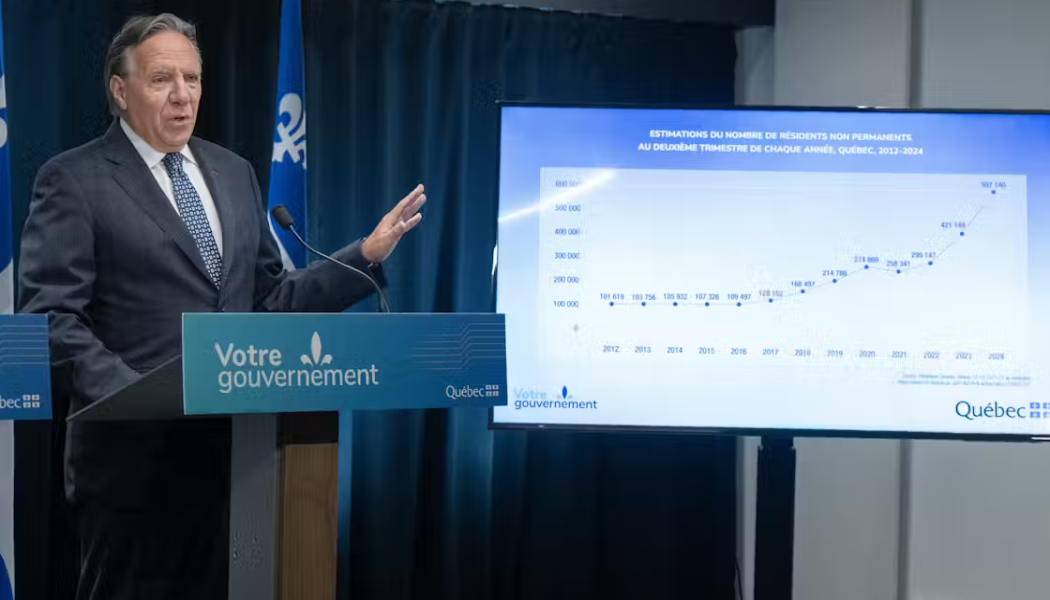
Immigration debates that are making headlines across Canada and internationally frequently address the subject through statistics.
But like any political issue, immigration involves human realities, not just logistical challenges. Given the prevalence of a technical approach to the migration issue, we deplore the lack of attention collectively paid to the people behind the numbers, to their journeys, and to their stories.
There are individual stories behind all the numbers, stories made up of hopes, ruptures, and adjustments. This is what we seek to highlight in the research project Entraide dans les marges (Mutual-aid at the margins) at the Université du Québec à Montréal, which documents emerging forms of mutual support in precarious contexts, such as those associated with immigration.
To reintroduce the human element into a debate largely dominated by quantitative and objective considerations, we draw, in particular, on the notion of escrevivência, a Portugeuse term that refers to an act of political self-narration. It allows marginalized people to talk about their experiences and to reinsert themselves into history.
In this respect, escrevência differs from traditional autobiography in its explicit political and collective purpose: it emerges from marginalized voices seeking to reshape how their communities are seen and to claim space in public discourse.
Self-narration
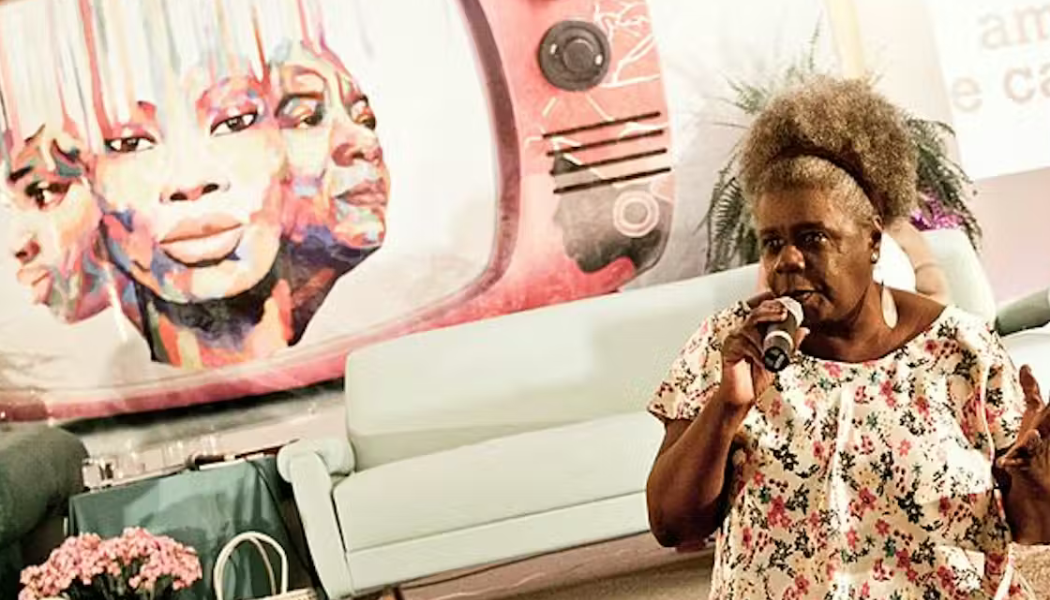
Escrevivência, a concept coined by Brazilian novelist Conceição Evaristo in 1996, refers to the act of “writing living” — a form of writing in which life becomes a political affirmation and produces knowledge. Rooted in Afro-diasporic traditions, it emphasizes collective memory, the reappropriation of roots and community identity.
Writing, in this context, means resisting the “memory loss” that results when those in power speak on behalf of marginalized people, instrumentalize them or simply never speak about them. In this context, writing transforms pain into a creative force and oblivion into the will to be heard.
Born on the margins, escrevivência allows subjects who have been historically silenced — particularly Black women — to move from objectivity to subjectivity. Through self-narration, it reconnects the body, memory and speech, restoring humanity to those whom history has often been erased or condemned.
Afro-Brazilian writer Conceição Evaristo is an important figure in escrevivência. In her short story “O espelho opaco de Seni”, written in Portuguese and published in 2022, Evaristo tells the story of Seni, a Black woman unable to see her reflection in the mirror.
At the end of the story she finally manages to recognize herself with ancestral clarity in her granddaughter’s golden mirrors. By grasping her own reflection — that of a long-denied lineage of Black women — she transforms the image into a living memory. This gesture of self-recognition, shared by her granddaughter and all their ancestors, reconnects the link between body, time and speech: a transition from imposed objectivity to reaffirmed subjectivity.
In the context of migration, this practice takes on a universal significance: storytelling becomes an act of healing and emancipation. Self-narratives present themselves as confident minority discourses, but they also claim the possibility of being able to “speak back” in order to rewrite both subjective and collective history.
Escrevivência therefore becomes a collective act of reconstruction; a space for recreating the world from the margins.
‘I don’t want to be treated like a number’
Among the oral accounts collected as part of our Entraide dans les marges project, that of Cecilia (a pseudonym), who arrived from Mexico two years ago, illustrates the significance of escrivência in the context of migration.
A math teacher in her home country and mother of a young child, she began looking for work in Québec, where she faced multiple linguistic and administrative obstacles.
She recounts how the first organization from which she sought help advised her, contrary to Québec’s intercultural principles, to “forget everything she knew,” as if her experience, training and professional identity were no longer of any value in Canada. “It was a slap in the face,” she would later say.
Fortunately, her journey did not end with this hurtful experience. A social worker, herself a migrant, and then a French teacher at a community centre — who has since become a close friend — welcomed and supported her. Over the course of these encounters, she says, she was “treated like a person, not a number.”
Little by little, she rebuilt her confidence and redefined her career path. Today, she works for a community organization, where she supports temporary international workers by informing them of their rights and the resources available to them.
For Cecilia, telling her story led her to realize that “the problem wasn’t with me, but, in fact, in the way others saw me.” In turn, she wants to support other migrant women to help them avoid, if possible, going through the same trials alone.
Inspiring initiatives
Other initiatives are part of this desire to give space to the self-narratives of migrants and refugees, including the non-profit organization Histoires d'Espoir (Stories of Hope), founded by Jade Bédard and Kristina Bastien, with whom we are collaborating as part of the Entraide dans les marges project.
By sharing the stories of people who have immigrated to Québec, they provide a space for expression where resilience, courage and hope intersect. These testimonials aim to reach others with similar experiences while raising awareness in the host society about the diversity of life trajectories.
Similarly, Paul Tom, director of the documentary Bagages, with whom we also collaborate, explores the power of collective storytelling through the stories of young people who have recently arrived in Québec. Coming from countries as diverse as Brazil, China, Ukraine and Colombia, these young people recount their migration journeys and integration through drama workshops.
These two initiatives, among many others, remind us that, beyond the numbers and slogans, real-life stories — fragile, powerful, and diverse — also matter. They have the power to forge connections and transform imaginations.
Writer
KLHIISA is a registered Non-Profit Organization.