Loading...
'If there was awareness or prevention at the time – my time, while I was trafficked – it could have been cut shorter, or even prevented it,' says survivor and campaign founder

Natasha Shepherd
Writer
Kevin Lamb April 23 2026 Orillia Matters
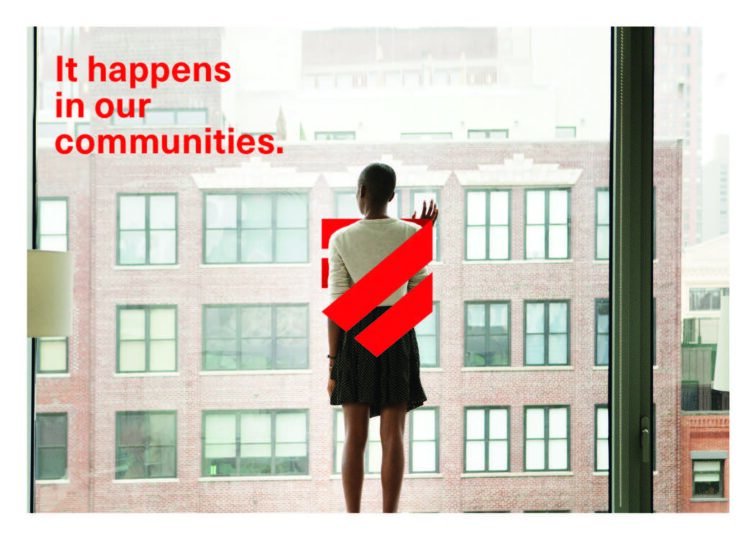
A new human-trafficking awareness campaign targeting ONroute rest stops on 400-series highways was parked in Barrie this morning to show off a transport truck and trailer working as an information billboard along Ontario’s highways.
Timea's Market, a bath and body shop created by Canadian survivors of human trafficking, is collaborating with ONroute, the Centre to End Human Trafficking and the Women Truckers Federation Charity to launch the ONroute to Freedom human-trafficking awareness initiative along major provincial highways.
The awareness campaign is targeted toward both the general public and potential victims who may not yet recognize their situation, according to campaign organizers.
Campaign materials will include educational posters, signs to identify warning signals and guidance on how to report human trafficking.
In addition to the awareness campaign materials such as posters and digital posters, the shop’s products, which are organic toiletries that are most likely to be purchased by victims currently being trafficked, will be placed in all ONroute locations. Each product will have a QR code leading to a website offering education, awareness and various ways to report human trafficking.
The press conference was held Thursday at the northbound ONroute Barrie location, between Mapleview Drive and Essa Road.
Representatives from ONroute, Timea’s Market, the Canadian Centre to End Human Trafficking, and the founder of the Women’s Trucking Federation were one of the speakers at the kickoff event.
Timea Nagy, founder of Timea’s Market, created the campaign nine years ago with the hope of raising more awareness surrounding human trafficking than there was at the time.
“I'm a survivor of human trafficking and I believe if there was awareness or prevention at the time – my time, while I was trafficked – it could have been cut shorter, or even prevented it,” Nagy said at the event.
She believes human trafficking is on the rise, but there is more help now than ever before.
“Because there's more awareness, people are coming forward, so I think it was pretty bad before because we had no awareness, no reporting. We just didn't know. Now we know,” Nagy said.
Ashley Franssen-Tingley, a director with the Canadian Centre to End Human Trafficking, a national
charity dedicated to ending all types of human trafficking in Canada, called the new awareness campaign “fantastic.”
“We have research that was published in 2021 that looked at the transportation routes right across the country that are being exploited by traffickers to maximize their profit, avoid detection by police and increase isolation of their victims,” she said. “So anytime we see an opportunity like this to get information to the general public, into the hands of victims and survivors, is fantastic.
“This is a lot of the work that we're trying to do, to encourage folks to talk about this issue to normalize it. We want to see hotline numbers and information out in the community as the rule and not the exception,” Franssen-Tingley added.
Anyone in the country can call their hotline 24 hours a day if they have questions, or want to talk through a situation they are experiencing or hearing about.
“Callers can also access resources and supports, or if they want to talk about what reporting to law enforcement can look like, so we can make those direct connections to supports,” Franssen-Tingley said.
The Canadian Human Trafficking Hotline is 1-833-900-1010 and their website can be found here.
“Human trafficking, as a definition, is the control and exploitation of an individual for labour or service where the third party, the controller, is actually taking all of the money,” she said.
Typically in Canada, the two most predominant forms of trafficking that are seen are sex- and labour-related.
“Sex trafficking tends to be affecting Canadian women and girls, two-spirit individuals. We know that indigenous women and girls are overrepresented in the general statistics of trafficking,” Franssen-Tingley said.
She said labour traffickers tend to target migrant workers.
“Folks are recruited, brought into Canada under false pretenses and then, oftentimes, once they're here, they may have had a large debt that they have to repay, or they're exploited, once they come to Canada,” Franssen-Tingley said.
The campaign’s main goal is to get information out and highly visible so that people can hopefully get out of a trafficking situation sooner or recognize the early signs of grooming and luring that they may be experiencing.
----------
Writer