Loading...
The Amnesty International findings should have repercussions for how Canada admits refugees, experts say.The Trump administration has been accused of widespread human rights violations stemming from i...

KLHIISA
Writer
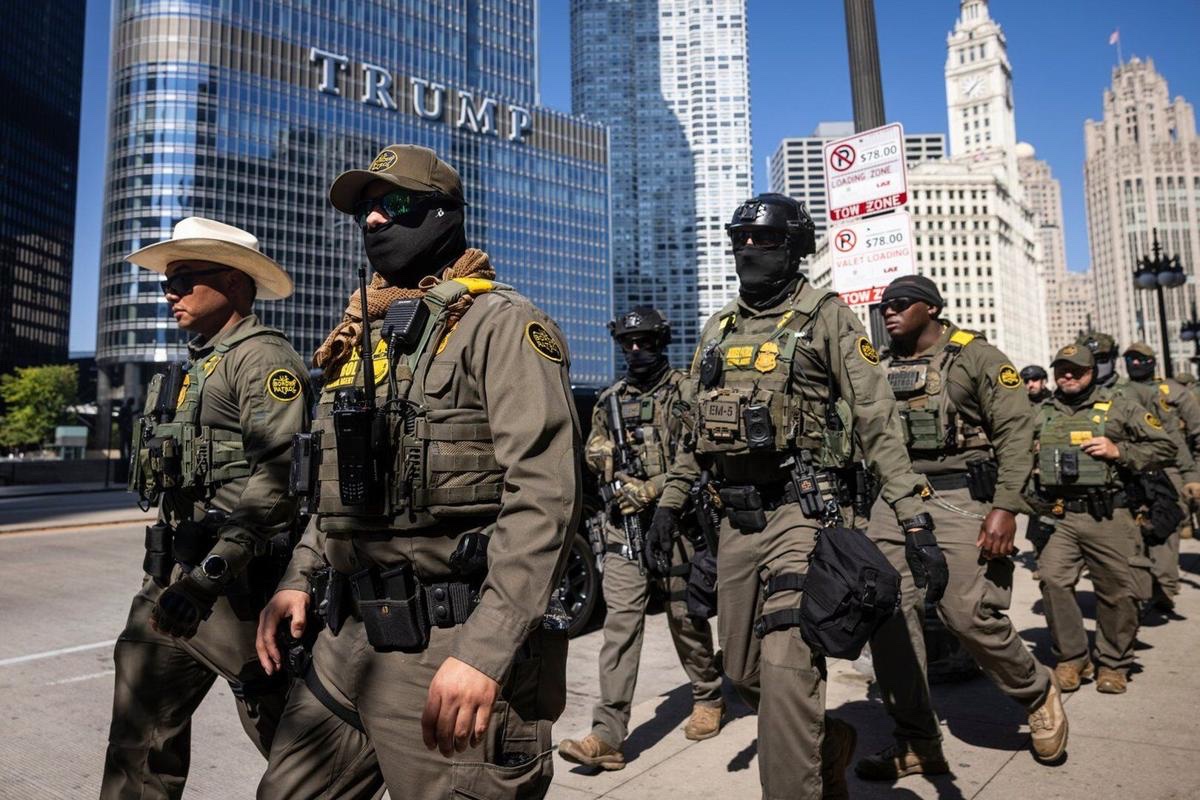
The Amnesty International findings should have repercussions for how Canada admits refugees, experts say.
The Trump administration has been accused of widespread human rights violations stemming from its “militarized immigration enforcement” in a new report that critics say Ottawa — and all Canadians — should heed.
Based on field research, Amnesty International USA documented incidents where officials with the U.S. Immigration and Customs Enforcement (ICE), Customs and Border Protection and other federal agencies were alleged to have breached the rights of migrants, bystanders and protesters.
The accusations included unlawful killings, some of which Amnesty said may amount to extrajudicial executions; racial profiling; arbitrary and discriminatory arrest; “incommunicado detentions,” in some cases in conditions that it said may violate the prohibition on torture; unlawful surveillance; and violent repression of peaceful protests.
“They were neither isolated nor exceptional, but characteristic of the manner in which the operations were conducted and reflective of broader national patterns,” said the 137-page report, “We Had Whistles. They Had Guns,” released on Thursday.
The Trump administration has defended its enforcement operations as lawful and necessary, claiming to target only criminal aliens, gang members and those who are national security threats.
Stories of Canadians arrested and detained in U.S. have made headlines since Trump returned to the White House last year doubling down on immigration enforcement effort. The fear of being detained at the American border has contributed to the dramatic drop in Canadian travel to the U.S.
Critics say the Amnesty findings should prompt the Carney government to reconsider whether the U.S. still qualifies as a safe country for asylum seekers — a designation with implications for Canada’s refugee system.
The Canada-U.S. Safe Third Country Agreement requires claimants to seek protection in the first safe country they arrive in. Unless they qualify for exceptions, they are sent back to the other country. The bilateral pact is built on the principle that both countries are safe, and respect human rights and international protection obligations.
“This report makes abundantly clear what, frankly, everybody knows, which is the United States is not a safe country to seek and receive asylum,” said law professor Audrey Macklin, chair in international human rights at University of Toronto.
Canadians among those arrested and detained
Amnesty said ICE and CBP arrested more than 597,000 people between January 2025 and July 2026, up 41 per cent from the preceding 19-month period under the Biden administration. The number of people in detention reached an all-time high of 71,937 in January. Data tools developed by the Deportation Data Project showed there were 327 arrests with book-ins to ICE detention involving a Canadian citizen from January 2025 to July 2026.
At least 50 people have died in ICE custody while more than 605,000 people have been removed from the U.S., Amnesty said. More than 21,000 people have been deported to third countries, often without due process, it added.
The report said federal agents used excessive force when arresting people, including breaking down doors of homes without warrants and with guns drawn, conducting military-style raids in the middle of the night accompanied by Black Hawk helicopters, driving recklessly and boxing in vehicles, smashing car windows without justification, throwing people who were not resisting onto the ground.
The Amnesty report calls for ICE to be abolished. Neither ICE nor CBP responded to the Star’s requests for comment.
Macklin said the report highlighted “a discernible pattern” of rights violations directed at an objective rather than just exceptional acts, errors or negligence by individuals in isolation.
“Canada is not just an innocent bystander in observing what’s going on in the United States,” she explained. “Even less so is it entitled to clutch its pearls and feel morally superior, because Canada actually is implicated in harm that is being done to people in the United States who are asylum seekers or even people who are refugees. It does that by continuing to enforce the Safe Third Country Agreement.”
Amnesty’s research is based on testimonies from 154 people, as well as analysis of 29 videos and three photographs. The interviewees included migrants, their families, civil liberties groups and observers, focusing on the immigration raids in Chicago, New Orleans, Minneapolis-St. Paul and Washington, D.C.
Ottawa can’t delegate human rights obligations to the U.S.
Julia Sande, a lawyer with Amnesty International Canada, said what struck her the most was how entire communities are being terrorized.
“This behaviour not only was allowed to exist but was celebrated in many ways and encouraged, including by President Trump himself,” she noted. “It really demonstrates that when it comes to the rights of people who are in need of safety, we can’t just delegate our human rights obligations to the United States. It puts people directly in harm’s way.”
Since its inception in 2004, the Canada-U.S. Safe Third Country Agreement has been contested in Canadian courts.
In 2023, the Supreme Court of Canada ruled the agreement does not violate the Charter’s guarantees of liberty and security of the person. However, it declined to rule on arguments that it violates gender equality rights because the U.S. does not recognize gender-based violence as a ground of persecution. The justices sent that issue back to the Federal Court.
Currently, there are two other pending court cases, challenging whether “safety valves” such as legal schemes and discretionary exemptions exist in practice to protect would-be refugees from being returned to the U.S., as well as the cabinet’s obligation to review the designation of the U.S. as a safe country.
“We all knew about the different human rights failures in terms of the intimidation, the harassment, the conditions of detention, but the fact remains that we have the Safe Third Country Agreement in place,” said Toronto immigration and refugee lawyer Maureen Silcoff, a co-counsel in these two cases.
“This Amnesty report should sound the alarm for cabinet to take a meaningful look at the U.S. as a designated safe country.”
Silcoff said the last review was in 2022, before Trump returned to the White House.
The Immigration Department said the federal government uses a strong framework to continuously monitor U.S. developments and the impact that changes in policies and practices may have on the refugee protection system. This monitoring, it said, ensures the conditions required of the U.S. safe third country designation continue to be met.
“Designation as a Safe Third Country is continually assessed,” the department said in an email. “Canada has a proud humanitarian tradition and takes its international obligations regarding asylum seekers seriously.”
Trump’s ‘militarized’ immigration enforcement should make Canada reconsider if the U.S. is a safe country, critics argue
Writer
KLHIISA is a registered Non-Profit Organization.