Loading...
Online hub from ex-envoy offers community groups, journalists and politicians short, usable summaries of studies on Canadian Muslims.When the Carney government pulled the plug on her role as the Speci...

KLHIISA
Writer
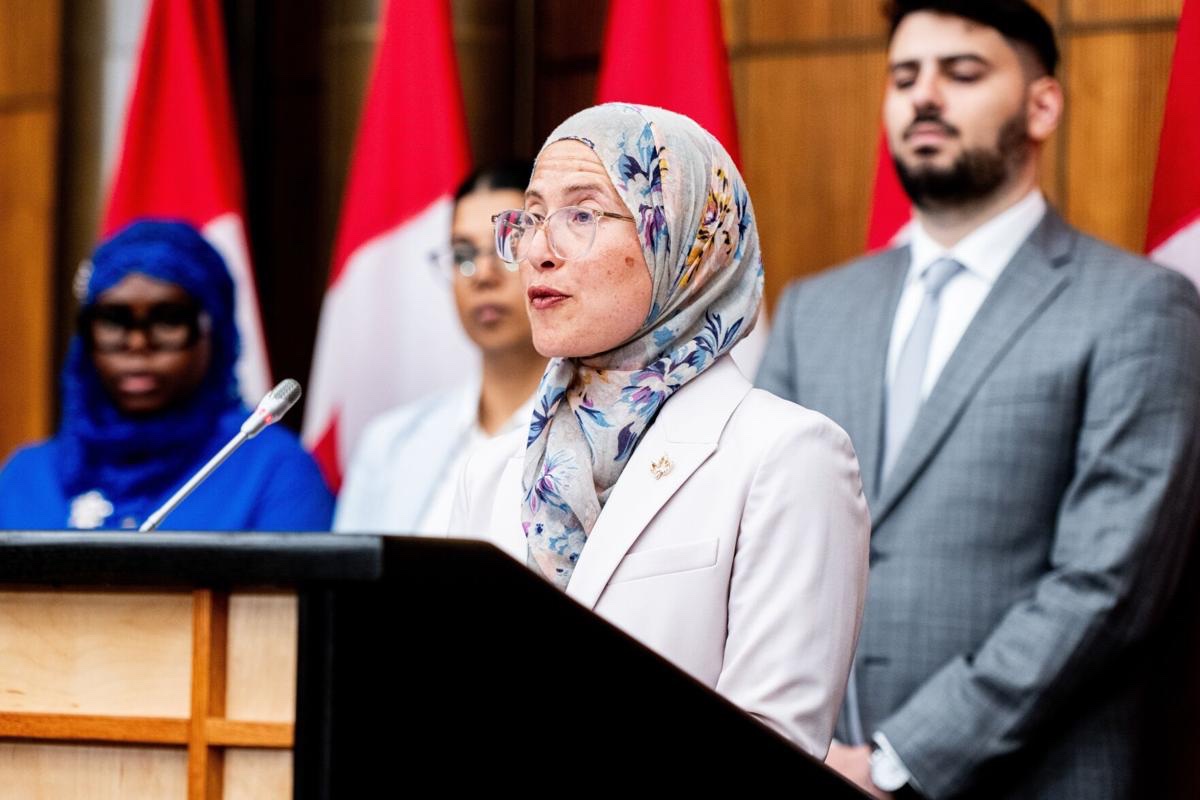
Online hub from ex-envoy offers community groups, journalists and politicians short, usable summaries of studies on Canadian Muslims.
When the Carney government pulled the plug on her role as the Special Representative on Combating Islamophobia in February, Amira Elghawaby walked away, feeling the weight of unfinished business.
In Ottawa, the former cabinet adviser had raised awareness within government and through public campaigns about the scourge of Muslim hate. She commissioned research and wrote a seminal guide on Islamophobia.
But despite the research from her and others, in the form of numerous reports and policy recommendations made to the federal government, little seemed to change.
Meanwhile, she has seen and spoken publicly about disturbing reports of hate. In recent months, shots were fired at a Winnipeg mosque, a fake severed, bloodied hand was thrown into a Montreal mosque and an imam was attacked in Victoria, B.C., and left with a fractured jaw.
Elghawaby has launched a global research and policy portal — said to be the first of its kind dedicated to research on Muslim communities — that will publish available studies on Muslims and make them accessible for community members and elected officials by using the recommendations in the studies to create policy briefs.
The resource will help community members and policymakers find information in digestible bits they can use to help keep the issues in the spotlight.
“We keep saying the same things, and official studies come out to say them, but nobody remembers,” Elghawaby said. “And nobody is keeping anybody accountable for that.”
The Muslim Communities Research Observatory (MCRO) portal, called macro for short, goes live Friday. It will be a global hub, a one-stop shop for advocacy groups who may “not even be aware of what research is out there” and for academics who “struggle with knowledge mobilization.”
“This is about raising the ability to ask for policy changes that are fully rooted in the evidence,” she said.
The site will be an important platform to disseminate a new five-year survey of Muslims in Canada by the University of Toronto’s Institute of Islamic Studies on social issues, faith and belonging that will also be announced Tuesday.
The last research on Muslim identities was the landmark Environics Survey in 2016, in which a question was, “Do Muslims want to embrace Canadian values or Muslim values?” said lead author Anver Emon. In this survey, researchers did away with that binary and found a majority of Muslims and non-Muslims saying Muslims in Canada want to adopt both Canadian and Muslim values.
It also found that while first-generation Muslim immigrants would overwhelmingly choose to immigrate to Canada again, nearly half (47.5 per cent) of second- and later-generation Canadian Muslims would choose to live in another country over concerns of affordability and inequality. The study reflects the perceptions of 903 Muslim households and 1,072 non-Muslim households across Canada, making it the largest sample of Canadian Muslims surveyed to date, Emon said.
MCRO is an ideal partner for the dissemination of research, said Emon, because, “as academics, we’re not the best at putting our ideas in 30-second sound bites, let’s be honest, right?”
Elghawaby’s experience with government, knowledge of policy and background as a journalist makes her “ideally suited” to translate that knowledge, he said.
While sites such as Georgetown University’s Bridge Initiative exist, Elghawaby said MCRO, which has a team of three people, will function as more than a library — it will break down the data into accessible policy fact sheets.
She hopes this will help members of the public meeting politicians, journalists looking for context in a hurry, and politicians seeking information to inform policy on Muslim lives.”
For example, a constituent at a mosque wants to ask a visiting mayoral candidate a question but doesn’t know what to ask. MCRO’s tool kit could offer a brief on the issue of parking near mosques on Friday. Having access to policy priorities would allow people to feel confident when they’re engaging with politicians “so that it becomes less a photo-op and more of a conversation,” Elghawaby said.
MCRO is a project of the Muslim Fund, a grassroots charity organization.
Elghawaby said the initiative comes based on some of her learnings in government.
“The relationship between our communities and the federal government has weakened,” she said.
Former prime minister Justin Trudeau and the revenue minister had promised the Muslim community that they were going to address the issue of disproportionate scrutiny of Muslim charities, she said. She commissioned research for which academics, including Emon, spent nine months finding a policy solution before producing a report.
When she met Prime Minister Mark Carney in the summer of 2025, she reminded him of the promise made and said he told her it would be addressed by summer of 2026.
“But nothing has been done,” she said.
The Prime Minister’s Office referred the Star’s query to the Canada Revenue Agency, which did not respond by deadline.
“Sometimes,” Elghawaby said, explaining the rationale that pushed her towards founding MCRO, “if you’re waiting for the government, even if you’ve got the promise from the highest person in government, the prime minister, himself or herself, it will not trickle down into the bureaucracy. You have come with the solution essentially written up, with a bow on top.”
Amira Elghawaby launches portal to turn Muslim research into policy briefs
Writer
KLHIISA is a registered Non-Profit Organization.