Loading...
All residents expected to be vulnerable families, matched to employment based on their skillsDespite delays, the temporary asylum reception centre is still on track to open in Bradford West Gwillimbur...

KLHIISA
Writer
All residents expected to be vulnerable families, matched to employment based on their skills
Despite delays, the temporary asylum reception centre is still on track to open in Bradford West Gwillimbury.
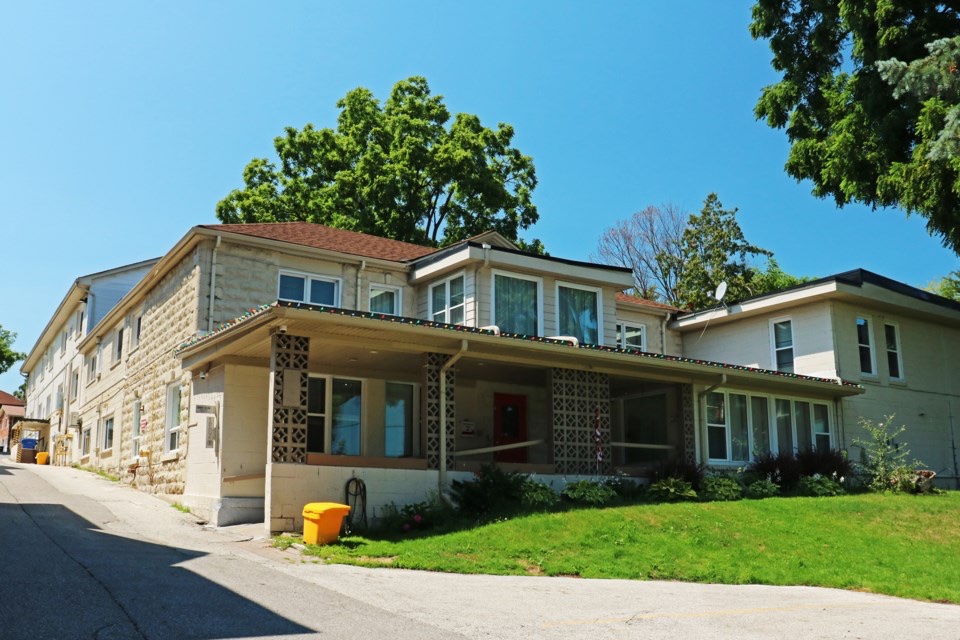
The County of Simcoe is putting the finishing touches on the centre at 136 Barrie St., which is the former home of LOFT’s Bradford House. During the grand opening of the new Bradford House at 31 Frederick St., the county’s social and community services general manager Mina Fayez-Bahgat spoke with BradfordToday and provided an update on the asylum centre.
“We’re on track. We're opening hopefully at the end of this month,” he said. “We believe the agencies will start doing referral pathways as we speak, starting to gather who would be a great fit for and willing to move in to our communities.”
The county had originally anticipated vulnerable families — who have already been admitted by Immigration, Refugees and Citizenship Canada (IRCC) — would begin moving from locations in Toronto and Peel Region into the centre as early as September.
However, Fayez-Bahgat explained that due to logistical complications securing food services, they now expect the first families to arrive in early November.
That provided more time for unit and building inspections, plus any needed paint touch ups before anyone moves in.
The facility has capacity for 54 residents at a time, all of which are expected to be families, according to Fayez-Bahgat.
Depending on how many people are in each, that could see the facility accommodate 10 to 15 families at a time, with groups of rooms assigned accordingly.
While the county can’t say for certain each family’s country of origin until they’ve officially been referred, Fayez-Bahgat expects it will reflect the national profile for asylum seekers over the past few years.
According to IRCC, the top nationalities of asylum claims in Canada in 2025 were:
Haiti — 17,610 (15.57 per cent)
India — 17,200 (15.21 per cent)
Iran — 6,930 (6.13 per cent)
Nigeria — 6,400 (5.66 per cent)
Mexico — 4,840 (4.28 per cent)
China — 4,385 (3.88 per cent)
Pakistan — 3,615 (3.20 per cent)
Bangladesh — 3,610 (3.19 per cent)
Ghana — 2,900 (2.56 per cent)
Columbia — 2,410 (2.13 per cent)
Canada received 113,105 asylum claims in 2025, about 34 per cent fewer than the 171,845 claims in 2024.
Regardless of their country of origin, Fayez-Bahgat reiterated the residents are being referred to the centre based on employment opportunities that align with their skills.
He confirmed that many of those asylum seekers are currently being housed in hotels and even traditional shelters while they await placement, meaning many of them don’t have access to facilities to properly cook food, manage their own space, socialize or engage in other life skills.
“This is more designed to feel like a home,” Fayez-Bahgat said of the temporary centre. “Our vision was to try to customize a program for the clients so that they have the best opportunity to succeed.”
The county is hoping each family will stay for a maximum of about 90 days before service providers place them with jobs and housing.
COSTI Immigrant Services is set to operate the centre with staffing around the clock, while the YMCA of Simcoe/Muskoka is set to provide case management, housing navigation, employment connections and community supports.
“The agencies we’re working with have been doing this for years,” Fayez-Bahgat said. “Not any agency can do this work. It needs to be an agency that’s trained to work with new immigrants.”
He previously explained the centre was made possible thanks to a $4.4-million grant from the federal interim assistance housing program (IHAP) to the county for 2025-27.
The grant covered about $2.86 million or 95 per cent of the roughly $3.01-million price for the county to purchase 136 Barrie St. from LOFT in December 2025, with the county covering about $150,000 or five per cent from funds it had set aside.
The remaining $1.54 million of grant funding is set to help cover 75 per cent of operating costs, with the county set to cover the remaining 25 per cent.
Those costs include insurance, utilities, staff time, plus about $800,000 for COSTI, $120,000 for the YMCA, $120,000 for security and the remainder for food costs.
“There wasn't a lot of room in the federal grant for discretion,” Fayez-Bahgat said, explaining the funds were earmarked for either capital or operating expenses, and even within operating the funds needed to go to specific costs.
He confirmed the centre is still expected to run for 12 months from when the first family moves in, and explained the service providers know how to wind down intake early enough to meet that target without the building sitting half empty for months.
“It’s trying to strike a balance to serve as many people in need, but to do it in a way that allows us to meet our deadlines with the federal program,” Fayez-Bahgat said.
In terms of what comes after that, the county is still open to different options, which might include local transitional housing.
“We know the need. We know what our data tells us: Families are in need. We have families living in shelters. We have the motel voucher programs. We have people living in cars,” Fayez-Bahgat said. “A facility like this in the short term can serve that need.”
In the long term, the county is hoping to include some form of multicultural centre as part of their 10-year settlement strategy developed by the local immigration partnership.
That could include a multi-use space for newcomers to use for growth and integration, and might also feature playgrounds or other amenities.
“That would be the vision, but we need to hear from the community. We need to hear from everybody and see what fits best,” Fayez-Bahgat said, noting applications for the liaison group are already beeing processed.
He emphasized that the county wants any long-term use to fit with the community, including the Bradford House seniors housing and neighbouring child-care centre.
“Family-based programming would probably be the most ideal fit for this area,” Fayez-Bahgat said.
He was joined by other county staff in providing a public presentation to town council on Aug. 4 about their plans to help asylum seekers, before officials shared more information, based on resident concerns and as the centre became a lightning rod for controversy, online misinformation, and accusations against racialized figureheads.
Mayoral candidate and Ward 6 Coun. Nickolas Harper put out a release Sept. 7 claiming he filed a complaint with Ontario’s ombudsman over the centre, asking them to defer the opening while reviewing the county’s decision-making process.
As acquisitions are typically confidential, county council dealt with the matter in closed session last year, including confidential reports on Aug. 12 and Sept. 23, with final approval of those matters on Oct. 7.
A representative of the Ombudsman’s office explained to BradfordToday that they cannot reverse decisions made by elected officials.
Additional information and answers to frequently asked questions are available on the county’s website.
Temporary asylum centre 'on track' to welcome first families next month
Writer
KLHIISA is a registered Non-Profit Organization.