Loading...
Edward Jeep had been carrying his Canadian passport for barely a month when the government told him it was no longer valid.The fifty-five-year-old Washington, DC–based US military retiree was travelli...

KLHIISA
Writer
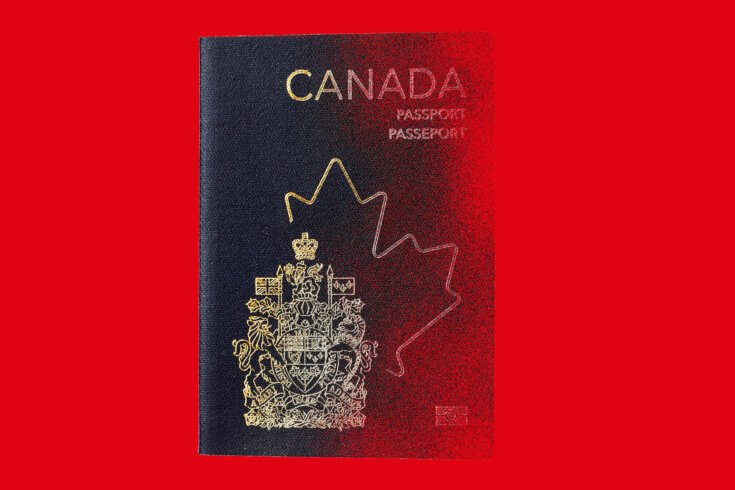
Edward Jeep had been carrying his Canadian passport for barely a month when the government told him it was no longer valid.
The fifty-five-year-old Washington, DC–based US military retiree was travelling in Europe. He had flown from Cardiff to Amsterdam and entered the Schengen Area using the Canadian passport issued to him in May. While he was abroad, two messages arrived from Immigration, Refugees and Citizenship Canada. The first, on June 13, said IRCC had placed the proof of citizenship issued to him under review and required him to surrender his certificate. A week later, another notice said his passport had been revoked and had to be returned within fifteen days.
Jeep’s was one of 100 similar cases that were flagged, with the number of those whose proof of citizenship was revoked remaining unclear. The suspensions came as IRCC’s proof-of-citizenship processing has been under strain. The department’s public processing-time tool recently showed a projected wait of about nineteen months, with nearly 100,000 people in line for a decision.
Jeep returned to the United States using his American passport. “Nobody has given me a conclusive answer whether there’s some database someplace that thinks I’m still in Europe,” he told me. He worried the mismatch—with him having entered the Schengen Area as a Canadian but having left an American—could create problems if Canada later issued him another passport.
Jeep had applied for and gotten citizenship under a recent law. Since 2009, Canada’s Citizenship Act had limited citizenship by descent to the first generation born abroad. A Canadian born or naturalized in Canada could pass citizenship on to a child born outside the country. But if that person, too, later had a child outside Canada, the offspring could not claim citizenship by descent. That rule became known as the first-generation limit. After an Ontario court found parts of that limit unconstitutional, Parliament passed Bill C-3, which came into force on December 15, 2025, expanding citizenship by descent to people who had previously been excluded.
Jeep decided to trace his claim through an ancestor named Margaret Brisco, who appears in the 1851 Census of Canada West as an eleven-year-old Roman Catholic girl born in what is now Ontario and living in Northumberland County. The census index estimates her birth year as 1840. At the time of his application in February, Jeep submitted a baptismal record, census records tracing the ancestor’s life in Canada, and certified documents connecting every later generation. Because the original church archives were closed for renovations, he also included a letter from the Archdiocese of Kingston confirming that the records could not be obtained directly. Based on these documents, he was issued a proof of citizenship in April, following which he obtained a Canadian passport in May.
But IRCC’s surrender notice in June said his evidence was not from “original source authorities.” It also said he had not explained why source documents were unavailable or shown his efforts to obtain them—the two things Jeep says his application had expressly addressed.
For applicants such as Jeep, this was not an ordinary immigration pathway. They were not asking Canada to admit them as newcomers and then allow them to work toward citizenship. A successful application under Bill C-3 bestows citizenship by descent rather than through naturalization, with applicants recognized as Canadians since birth or January 1, 1947—when Canadian citizenship became a legal status—whichever was later.
That legal distinction sits awkwardly inside the politics of the moment. Ottawa has been trying to reduce temporary-resident numbers, with IRCC announcing plans to set targets for that demographic for the first time and to bring their numbers down to 5 percent of Canada’s population. At the same time, Bill C-3 opened a path for people living abroad—some with little or no recent connection to Canada—to have citizenship recognized through ancestry.
Eligible descendants did not have to first live in Canada, pass a citizenship test, show knowledge of English or French, or complete the process expected of permanent residents seeking naturalization. Some may never move here. Others, including Americans worried about conditions in the US, saw the law as something more practical: a route to safety, mobility, a respectable dual citizenship, or a possible future in Canada.
That is where the certificate suspensions became more than a paperwork problem. Canada had widened the legal doorway to citizenship. But when early applicants stepped through it, IRCC appeared unprepared for the old records, complicated family histories, and the political meaning they brought with them.
Take the case of forty-nine-year-old Thomas Kearney Maher, who is gay and had previously left the US in search of a “more tolerant” place to live. He moved from San Francisco to Dublin in January 2018 but returned to the US the following year, after his employer closed its Dublin office, and settled in Seattle. His husband joined him there in December 2021. A month later, the couple moved together to Dublin, entering Ireland as a family.
His sibling, who is trans and lives in the US, viewed Canadian citizenship as a possible route to safety soon after Maher decided to apply under the pathway opened by Bill C-3. Maher traced the family’s claim through a great-great-grandfather born in Quebec in 1861. That ancestor, Edouard Gaudiase Lacoursière, later moved to Minnesota, and his son Frank was born there in 1889, before the state was systematically recording civil births. To establish that link, Maher submitted Edouard’s Quebec birth certificate, a no-record letter for Frank’s civil birth record, a baptismal record, and census records showing Frank with his father. Later generations were documented through birth certificates, a marriage licence, and other identity records.
IRCC approved the citizenship applications of Maher, his mother, and his sibling using the same ancestral chain. Maher received his certificate on April 2. He then flew to Toronto to apply for his first Canadian passport, which was issued a few days later. But on June 16, while he was in Ireland, Maher received a letter from the registrar of Canadian citizenship, requiring the surrender of his certificate. The letter said IRCC had information indicating he “may not be entitled to hold a Canadian certificate of citizenship.” It did not identify a particular record. His mother and sibling, whose applications relied on the same evidence, did not receive surrender letters.
Then came another twist. Three days later, IRCC reverified Maher’s certificate without asking him for another document or explaining what had changed. When the email arrived, Maher says, “I had my husband read over it for me to make sure I wasn’t hallucinating things, because it’s been quite a ride.”
The reverification resolved the immediate threat to his certificate but not the uncertainty surrounding his passport. IRCC did not say whether it had remained valid during the review. Maher postponed plans for a summer trip to British Columbia, worried that trying to enter Canada with a passport of uncertain status could create another problem. “We have been harmed much less by this than many other people,” he told me. “But it is not right.”
Forty-five-year-old Elizabeth Ida Pitts Tossell moved to Toronto with her wife and young son in March 2025. The family came to Canada from Maryland on temporary permits connected to her wife’s employment. They intended to pursue permanent residence, but Tossell worried that route could be difficult. By contrast, citizenship by descent offered something more secure: the possibility that Toronto—where they lived only a few blocks south of where Tossell’s great-grandfather was born in 1867—could become the place where their son would grow up.
Tossell submitted her proof-of-citizenship application in June 2025, under interim measures before Bill C-3 formally came into force that December. Her great-grandfather, William John Tossell, was born before Ontario routinely maintained the kind of civil birth records IRCC now describes as preferred evidence. So Tossell supplied a certified copy of the 1871 census showing him, then four years old, living in Toronto and listed as born in Ontario. She also provided an Archives of Ontario–certified record showing his parents had married in Toronto in 1865.
After nearly eleven months of processing, IRCC issued Tossell a citizenship certificate on May 6. Her young son received his certificate two days later. Then six weeks after that, both were told to surrender them.
For Tossell, the news was “like a punch in the gut.” “It really sent us back into a lot of anxiety and uncertainty,” she says. She and her wife had already promised their son that Toronto was where he would live and grow up. Now they no longer knew whether Canada would continue to recognize the future it had offered them only weeks earlier.
Tossell believes the suspensions have fallen particularly heavily on LGBTQ+ Americans who pursued citizenship because they were actively looking for a safer and more stable future in Canada. “I assume that was not the intention,” she says, “but it sure seems like it’s the effect.”
Then in another twist similar to Maher’s, on July 2, IRCC revalidated both Tossell’s and her son’s certificates. In a letter, the registrar of citizenship said a thorough review had found sufficient evidence to support Tossell’s citizenship claim and that her certificate would not be cancelled. The letter did not say which record had triggered the earlier suspension.
Another pattern connected Jeep, Maher, and Tossell: all three had asked IRCC to process their citizenship files urgently. The overlap does not establish that urgent processing caused the suspensions, but it raises the question of whether the files initially flagged passed through the same accelerated workflow, processing team, or set of instructions.
Canada Gave Them Citizenship. Then Changed Its Mind
Writer
KLHIISA is a registered Non-Profit Organization.