Loading...
Soyoon Kim felt blessed when she got direct entry into a rare immigration program that promised a clear pathway for Canadian permanent residence. There were just 5,500 spots, equally split betwee...

KLHIISA
Writer
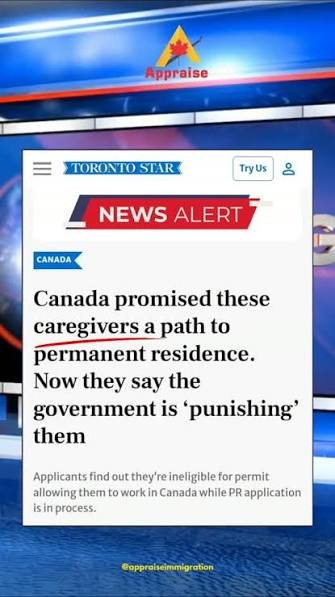
Soyoon Kim felt blessed when she got direct entry into a rare immigration program that promised a clear pathway for Canadian permanent residence.
There were just 5,500 spots, equally split between foreign home care workers who look after children and those who support seniors or people with medical needs. The popular program closed applications the same day it opened in March 2025 after the caps were reached within hours.
With her work permit still good for another 16 months then, the Calgary woman was hopeful she would get her permanent status in time or at least her work authorization extended, just as it was for those who applied through this program in previous years.
It came as a shock two months ago when Ottawa updated its website. It told applicants for the 2025 edition of the home care worker immigration program they’re not eligible for the so-called bridging open work permit. The permit would have allowed them to remain and work in Canada while their permanent residence application is in process.
“Many caregivers who applied in good faith have lost the ability to work legally while waiting for permanent residence processing,” said Kim, 40, who came here from Korea with her husband in 2024. Their work permit expires next week.
“Leaving us without a viable way to maintain legal work status while stretching the processing time by years is completely unfair.”
What’s also unfair, according to the Canadian Caregivers Assistance Organization, is that the bridging work permit is available to most other economic immigration applicants with pending permanent residence. The advocacy group called it an affront to the contributions of foreign caregivers.
“This is highly discriminatory,” said its founder, Allan Ralph Basa, an immigration consultant based in Toronto. “Why will you deprive these caregivers of the continuity of their status?”
The updated information on the foreign caregiver program followed other recent policy “clarifications” that have resulted in tightened eligibility for Iranian nationals seeking work permit extensions under a special public policy and for international students who graduated from non-credit programs when applying for post-graduation work permit.
Ottawa has been accused of moving the goalposts to push temporary residents out of Canada, in order to reduce the share of temporary residents to five per cent of the country’s overall population by the end of 2027, a promise by the Carney government in response to public backlash against high immigration.
According to Statistics Canada’s latest quarterly estimates, there were 2,558,562 temporary residents in the country, accounting for nearly 6.2 per cent of the population.
“Why do they punish caregivers in an administrative breakdown of their own making?” asked Basa. “It does not make sense.”
Out-of-status people are vulnerable
The Immigration Department said it did not change the rules, because a bridging open work permit was never part of the 2025 edition of the foreign caregiver program. Those with expiring work permits, it added, can apply to renew work permits under other programs.
“We recognize this is an important issue for the people affected,” it said in an email. “Behind every application is a person, a family and important plans for the future, and we understand there are questions about the program requirements.”
Balbir Singh started working full time as a home support worker for a Canadian elderly couple in Toronto after he graduated from Sault College’s two-year postgraduate program in health leadership in 2024.
He was tasked with all aspects of the husband’s personal care before the man’s death in January. Now, he spends his days making meals, preparing medication, doing household chores and running errands for the widow.
The Indian man is among 570 applicants of the 2025 foreign caregiver program who got an acknowledgment of receipt from Immigration — a document previously required for the bridging work permit — that his permanent residence application is being processed.
But that acknowledgment no longer matters.
What angered Singh is the fact that the 2025 program also reserves 300 spots for applicants who lacked status in Canada at the time of the application and gave them work permits.
“The government clearly recognized that people who are out of status are vulnerable” to exploitation by bad actors and removal, said Singh, an organizer of a social media group of 700 applicants.
“So why can’t they do the same for those who have followed the law and been legal in Canada?”
Canadian families also in limbo
Not only are these caregivers in limbo, so are Canadian families who struggle to find stable care for their loved ones.
It took Josée Bergeron, a mother of five in B.C., and her husband about a year — and a few thousand dollars — to secure a work permit in late 2023 for Iliriana Pantina, their nanny from Croatia.
“We tried to find somebody local,” said the Kelowna resident. “There was really nobody that was interested in a position that was full-time, that had the proper experience and credentials, and really where we felt we could trust them with our children.”
Most people are only interested in picking up a few hours here and there to make extra money and it’s hard to get reliable help, added Bergeron. She said she doesn’t want to go through another desperate search, but she may have to now that Pantina’s work permit extension was refused in July.
The Immigration Department said it will continue to process caregivers’ permanent residence applications after they leave. However, Pantina said that’s meaningless as the current processing time is at a staggering 74 months and by then, the Canadian families may no longer need the caregivers and the required job offers will be invalid.
“We feel completely used and betrayed,” said Pantina, 44, who has a three-year certificate in early childhood education and ran a daycare centre in Spain. “This is not OK.”
How can we survive without working?
Renuka Mijar, a midwife and nursing assistant in Nepal, stopped working immediately as a caregiver for an elderly woman after her bridging work permit was refused in July.
She has not been able to find an employer who has been pre-approved by Service Canada to sponsor a foreign caregiver’s work permit, even though she has seen numerous ads from people illegally selling approved job offers for as much as $40,000 — money she doesn’t have.
Mijar, who came with her husband via Dubai, where he was a foreign worker, said her other option is to apply to remain in Canada as a visitor, but that’s not financially feasible because it wouldn’t allow them to work. The couple has an eight-month-old Canadian-born daughter and it is difficult to find jobs in the Middle East because of the Iran war.
“We don’t mind Immigration taking 60 months to make a decision,” said Mijar, 34, who has savings to last six months in Canada. “We understand there’s a lot of backlogs and it takes time. But how can we survive for that long without working?”
The Immigration Department didn’t respond to the criticism that caregivers without work authorization are vulnerable to exploitation by employers and unscrupulous agents, but it cautioned that charging fees for job placement or approved job offers is illegal.
“We recognize that lengthy processing times are difficult for applicants and employers alike,” it said. “Home care workers have long held a valued and important place in Canada, and this has been recognized through the long-standing provision of immigration pathways for these occupations.”
The department said more than 120,000 home care workers and their family members have been granted permanent residence in Canada between 2015 and 2025.
Canada promised these caregivers a path to permanent residence. Now they say the government is ‘punishing’ them
Writer
KLHIISA is a registered Non-Profit Organization.