Loading...
The Carney government has quietly walked back some of its cuts to a program providing temporary health-care coverage to refugees and asylum-seekers, months after slashing benefits for some of Canada’s...

KLHIISA
Writer
The Carney government has quietly walked back some of its cuts to a program providing temporary health-care coverage to refugees and asylum-seekers, months after slashing benefits for some of Canada’s most vulnerable newcomers.
Earlier this year, following a budget pledge to lower funding, Ottawa introduced changes to the Interim Federal Health Program (IFHP), which provides health care to resettled refugees and asylum claimants who are waiting to qualify for provincial or territorial insurance.
Beginning in May, most people eligible for the program were required to pay 30 per cent of costs for health services, assistive devices and medical supplies that had previously been covered, along with $4 for prescription medication and refills.
But last week, Medavie Blue Cross, the program’s insurance provider, contacted health professionals with an update: items and services like feeding supplies, respiratory devices, implantable hearing aids, nursing homes and hospital-based rehabilitation would be moved to a different coverage tier, where co-payments would be scrapped entirely.
“We welcome any improvements in this situation because these co-payments were posing insurmountable financial barriers to patients who need this care,” said Dr. Vanessa Redditt, a family physician who primarily works with newcomer and low-income patients in Toronto.
“But gaps persist because there are still many essential medical services and medical supplies that are still subject to that 30 per cent co-payment and that are out of reach for individuals.”
Redditt believes there are several reasons why the government reconsidered some of its changes, including covering that particular group of services and supplies because provincial plans typically do as well.
“Number two, these are things that, without them, people stay in hospitals longer. If the hospital cannot discharge you because you don’t have your home oxygen or because you don’t have feeding tubes, it means that you would stay longer and longer in the hospital with clearly rising costs,” Redditt added.
But the physician said there could be another reason for the walkback: the months advocates spent meeting with MPs, holding rallies, and speaking with media to protest the cuts.
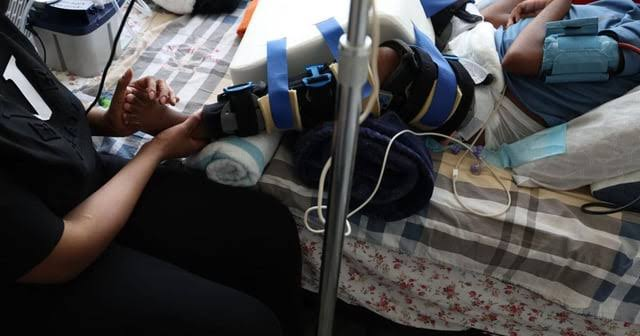
That includes a Star story about a mother whose young daughter has severe health challenges, who are relying on the program as they wait for their asylum claim to be heard.
The mother, whom the Star referred to as Olivia due to her fears that using her real name would endanger her family, said she had to scrape together more than $500 a month to pay the new charges, which would have been covered if she was a resident. Olivia worried that the cuts would mean sacrificing necessities like meals and toiletries to care for her daughter.
Because of the July 31 changes, Olivia will no longer need to pay for some medical items, like feeding supplies, that her daughter needs to survive.
It’s a “welcome relief,” said Dr. Shazeen Suleman, a pediatrician who is familiar with the family’s case, “but it will not alleviate all of the things that Olivia needs.”
In a statement to the Star, a government spokesperson declined to answer when asked whether public scrutiny of the funding cuts influenced the decision to reverse them, but said the changes were part of “routine updates.”
“The July 2026 update is expected to impact a very small proportion of current IFHP beneficiaries and will largely maintain the approximately $200 million in projected annual savings associated with the May 2026 program changes, while better aligning coverage for these select services with how they’re typically delivered through publicly funded provincial and territorial health care systems,” wrote a spokesperson for Immigration Minister Lena Metlege Diab.
The program, which had been scaled back under prime minister Stephen Harper and restored by Justin Trudeau, has been widely slammed by Pierre Poilievre’s Conservatives. The opposition leader has argued that some who benefit from the coverage receive better care than Canadian citizens, and says the program’s costs have skyrocketed.
Program spending has ballooned in recent years, growing from $210.6 million in 2020-2021 to $896.4 million in 2024-2025. Those numbers fluctuate depending on the number of asylum-seekers and resettled refugees, and are also tied to backlogs in hearing asylum claims.
“We want to uplift care for everyone, not punch down to the most vulnerable. That’s the worst thing we can do for our society, for our health-care system,” said Redditt, on her desire to see even more services and devices fully covered.
“When we ensure that everyone has access to the care that they need, we build healthier communities, and that’s what actually makes Canada strong.”
Carney government restores some health coverage it had cut for refugees
Writer
KLHIISA is a registered Non-Profit Organization.