Loading...
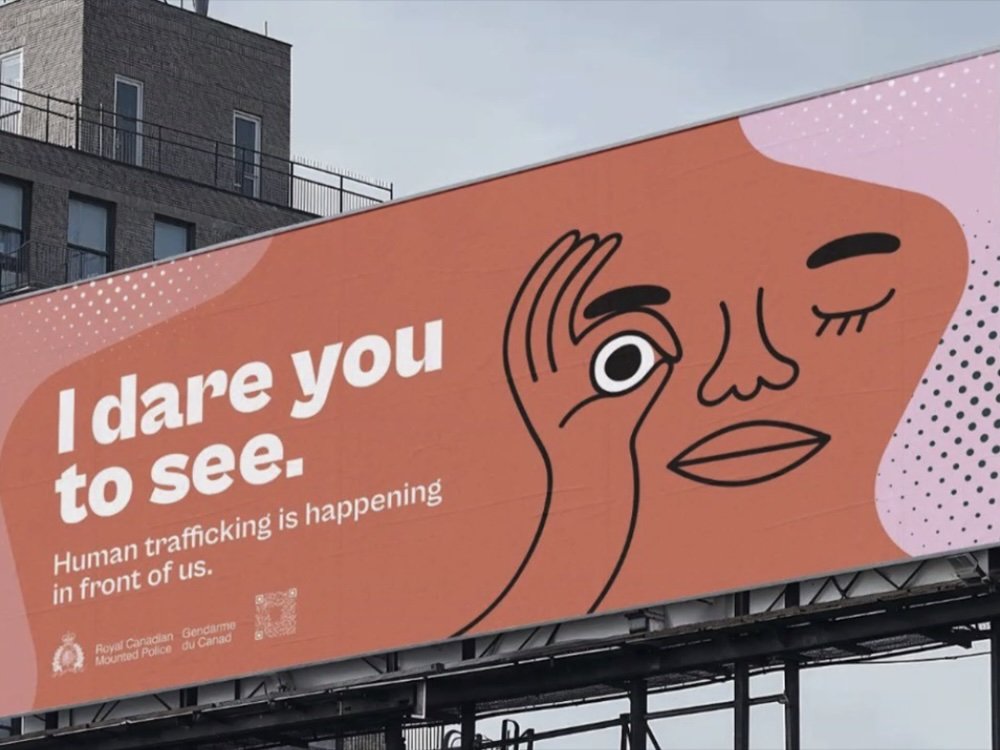
The BC RCMP Counter Human Trafficking Unit is launching a new campaign that encourages people in the hospitality industry to report human trafficking.

KLHIISA
Writer
They say it leads to increased surveillance and racial profiling. And there’s a better way to respond.
Michelle Gamage April 30 2026 The Tyee
Michelle Gamage is The Tyee’s health reporter. This reporting beat is made possible by the Local Journalism Initiative.
The BC RCMP Counter Human Trafficking Unit is launching a new campaign that encourages people in the hospitality industry to report human trafficking.
But an expert in human trafficking and the head of an organization that supports sex workers told The Tyee public campaigns like this tend to just create a moral panic without actually addressing human trafficking.
They say a better way to counter human trafficking is to address the root causes of economic and social insecurity, such as access to safe housing and sustainable and equitable work.
The campaign comes seven weeks before the FIFA World Cup comes to Vancouver. Police often warn about increases in human trafficking during major sporting events, experts say, and those warnings are, in part, used to justify an increase in policing surveillance.
Human trafficking, according to a 2024 Statistics Canada report, “involves recruiting, transporting, sheltering or controlling the movements of a person for the purposes of exploitation, usually for sexual reasons or forced labour.”
The same report says the full extent of human trafficking in Canada and internationally is unknown, but from 2014 to 2024 there were 5,070 human trafficking incidents reported by Canadian police. It does not break down what people were being trafficked for, but the report says 93 per cent of victims were women and girls and two-thirds were younger than 25.
The new RCMP campaign said that since 2024 there have been 2,311 cases of trafficking identified nationally, with nine per cent occurring in B.C. It did not break down the trafficking cases by type.
Before the 2010 Winter Olympics, anti-trafficking groups warned the Games would bring an increase in human trafficking to the Lower Mainland. A 2009 Vancouver police initiative produced a study that questioned whether the Olympics would increase the rate of local human trafficking.
After the Games, a third study conducted by the Global Alliance Against Traffic in Women Canada did not find an increase in human trafficking or sex work during the Games. There also wasn’t an increase in police investigations into human trafficking related to the Games.
When The Tyee asked the Counter Human Trafficking Unit how many people are estimated to be trafficked in B.C., how many traffickers might be operating in the province or how those numbers are supposed to increase in the lead-up to the World Cup, the RCMP declined to give specifics.
In an emailed statement, Staff Sgt. Kris Clark said “the RCMP does not speculate on, nor provide preliminary estimates related to crime trends,” and that “research and past event analysis” showed an increase in tourism leads to an increase in sex work, which can elevate the risk of human trafficking and exploitation.
Red flags and lapel pins
Speaking last week at a BC Restaurant and Food Services Association webinar on anti-trafficking, Insp. Lyndsay O’Ruairc, who heads the Counter Human Trafficking Unit, said she will be distributing posters and lapel pins to restaurants around Vancouver that encourage the public to keep an eye out for “red flags” of human trafficking.
The unit is also launching an app, likely in May, and will be putting up billboards as part of the same campaign, she added.
After “three to five minutes” of training, hospitality workers can get a lapel pin that will show “traffickers and victims that these people have been educated on what to do and how to help you,” O’Ruairc said in the webinar. The more lapel pins in an establishment, the less likely a human trafficker will hang around, she added.
The hospitality workers are encouraged to look out for red flags including customers waiting for long periods of time on their phone, customers visited by young people, first dates that last for only a short duration, large takeout orders paid in cash, and people flexing their wealth and influence while talking to multiple staff members during a single visit.
The campaign was privately funded through public donations to the Human Trafficking Prevention Network of BC, Clark said. Its conceptual development included input from survivors, victim advocates, municipal police services and the RCMP.
The campaign is also informed by the 2010 Olympics study by the Global Alliance Against Traffic in Women Canada, Clark said. The study recommends awareness training for construction, hospitality services and transportation industries.
The study also recommends that public awareness campaigns be “accurate, evidence-based and adhere to the principal of ‘do no harm,’” and that they include input from all relevant community stakeholders.
Moral panic, increased policing
Alison Clancey, national director of the Global Alliance Against Traffic in Women Canada, was very critical of the postering campaign.
“See something, say something” campaigns address a single moment rather than the larger complex and ongoing situation, she said. An intervention could remove someone from a bad situation, but, she asked, what happens to them next week, or next month?
She said these kinds of campaigns aren’t evidence-based and can put marginalized people at greater risk.
It would be more effective to address concerns about housing, employment and health care and offer long-term supports, Clancey said.
Clancey said campaigns like the one launched by the RCMP instead promote civilian surveillance.
“It’s very well documented that this leads to misidentification and racial profiling and it doesn’t actually do anything to meaningfully address human trafficking,” Clancey said, adding it’s “frustrating” to have the RCMP taking this approach.
Clancey stressed that it’s great that people see or think about injustice and want to act.
However, she said, the RCMP campaign just encourages people to call the police.
This leads to increased policing of marginalized communities and can put undocumented workers or sex workers in “even more precarious positions,” Clancey said.
Just because a racialized person is doing sex work does not mean they are being trafficked, she added.
Labour trafficking may be more common
Angela Wu, executive director of SWAN Vancouver, which supports migrant and immigrant indoor sex workers in the Lower Mainland, told The Tyee that the RCMP campaign “is not being precise.”
“Are they talking about labour trafficking, sex trafficking, are they talking about children and youth? It’s not clear,” she said.
Wu said the campaign seems to be encouraging civilian surveillance for potential sex traffickers while largely ignoring labour trafficking.
“There are so many systemic issues that lead to actual trafficking, and those are often left out of the conversation,” she said. “There’s never any critique of the Temporary Foreign Worker Program or the fact that there are such things as closed work permits that leave people much more vulnerable to exploitation.”
Closed work permits tie a migrant worker to a single employer. If an employer is abusive, employees can apply for an open work permit. But critics of closed work permits have long said that they leave workers vulnerable to various types of exploitation.
Vague public awareness campaigns only encourage people to make “very surface-level assumptions” about racialized sex workers, Wu said.
“Immigrant and migrant sex workers are often perceived to be trafficking victims just because they’re newcomers, or they don’t speak English and they’re doing sex work,” she continued.
Increased moral panic about human trafficking has a “huge impact on immigrant and migrant sex workers” because they “experience increased surveillance and enforcement,” Wu said.
Since the Counter Human Trafficking Unit launched last year, there has been an increase in arrests, detentions and deportations of immigrant and migrant sex workers, Wu said, although she was not sure if one caused the other.
As an example, Wu said increased surveillance of a massage parlour can push someone to call the police because they misjudge a worker’s age because they are Asian. The police will come to check on the tip, find some workers who are on a temporary work permit or who have overstayed their visa, and arrest them. The worker is later deported.
“We have actually been seeing that across the Lower Mainland. We’ve heard of many more police visits since this unit began operating,” Wu said.
A spectrum of exploitation
Workers of all kinds can experience a spectrum of exploitation.
SWAN is positioned to support people who are trafficked, Wu said, and the organization occasionally does so. But ultimately, she said, sex trafficking “is really not that common.”
“The community we support, they definitely are at a higher risk and many of them do experience some sort of exploitation,” she said. But “it often doesn’t meet the threshold of trafficking.”
When trafficking does occur, Canada’s sex work laws complicate the response, Wu said.
In Canada it is legal to sell sex, but illegal to solicit or buy. People with a temporary work permit or visa are not allowed to sell sex.
The laws assume all sex work is inherently exploitative, Wu said. But that’s not the experience of many sex workers.
“A lot of the time, when someone from our community has experienced trafficking, all they want to do is their work without being exploited or trafficked,” she said. “They want to go back to doing sex work.”
Wu said that isn’t understood by many police officers, who seem to think helping someone escape from trafficking means they don’t want to do sex work.
Wu and Clancey expressed frustration at the lack of clarity and data in the recent RCMP campaign.
For example, the presentation to hospitality workers said a trafficker can earn $168,000 to $336,000 per year per trafficked person. When The Tyee asked how it came up with that number, Clark said data was pulled from “established public sources,” including the 2024 Statistics Canada report. The report does not reference either of those numbers. Wu and Clancey said they have never heard of a sex worker earning that kind of income.
They were also frustrated with the suggestion that trafficking is everywhere. There’s no data they’re familiar with that backs that up, they said.
Asking workers what they need
A better way to meaningfully address trafficking is to understand what victims and survivors need to be safe and well, according to a campaign recently launched by the Global Alliance Against Traffic in Women Canada.
An online resource from the Office for Victims of Crime Human Trafficking Collective encourages people to centre victims’ humanity when potentially interacting with someone being trafficked, and help connect them to resources and community.
For example, it is more useful to ask someone if they have a safe place to sleep tonight and connect them with a local shelter than to press them to admit they are being trafficked.
Another way to respond with direct action is to reach out to a local migrant worker association or local sex workers organization with concerns and ask how to contribute to anti-trafficking work, Clancey said.
Wu added that she would like to see the RCMP collaborate more with organizations like SWAN and the Global Alliance Against Traffic in Women Canada to address trafficking. The unit has not yet reached out to SWAN, she added.
https://thetyee.ca/News/2026/04/30/Experts-Critique-RCMP-Human-Trafficking-Campaign/
Writer
KLHIISA is a registered Non-Profit Organization.