Loading...
Smugglers squeezed his mother and younger brother, about seven years old, into a small speedboat. Youssufi and his two sisters, niece and nephew remained in the safehouse. They were told they would go in the next one. The small boat headed out into the open waters, making the treacherous voyage on the Aegean Sea that thousands of refugees make each year as they navigate to Greece from Turkey. The family had come so far, from Afghanistan, having endured a 30-hour walk through the cold mountainous terrain en route from Iran. A journey of willpower versus exhaustion. A new life away from conflicts and violence seemed to be within reach.

KLHIISA
Writer
By Nicholas Keung Toronto Star July 13, 2026
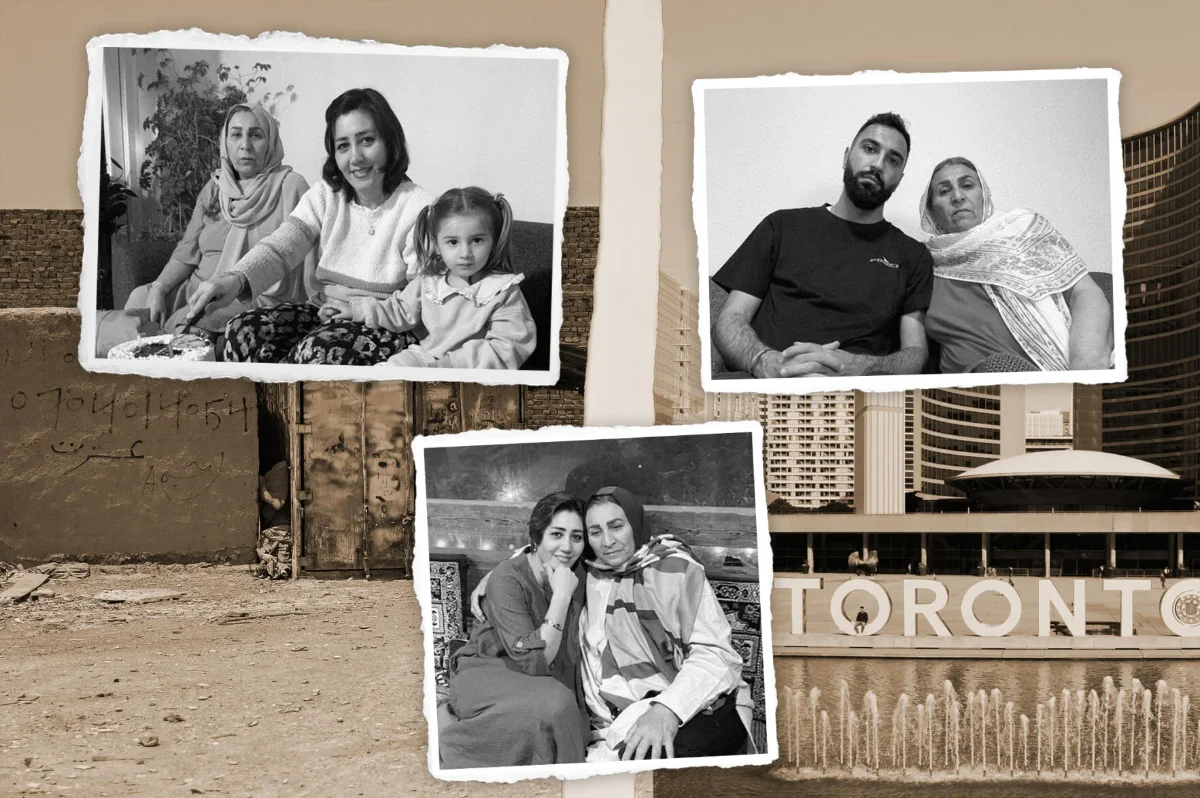
Mo Youssufi remembers watching as they split up his family.
Smugglers squeezed his mother and younger brother, about seven years old, into a small speedboat.
Youssufi and his two sisters, niece and nephew remained in the safehouse. They were told they would go in the next one.
The small boat headed out into the open waters, making the treacherous voyage on the Aegean Sea that thousands of refugees make each year as they navigate to Greece from Turkey.
The family had come so far, from Afghanistan, having endured a 30-hour walk through the cold mountainous terrain en route from Iran. A journey of willpower versus exhaustion. A new life away from conflicts and violence seemed to be within reach.
“We were afraid,” said Youssufi. “But we were also like, ‘We’ll be seeing you in a couple of hours,’ and then, more importantly, your journeys are getting shorter and shorter until you reach your final destinations, hopefully.”
Little did he and his family know this moment would mark the beginning of an agonizing separation that has spanned two decades. He didn’t even get a chance to say goodbye.
That next boat for Youssufi and his two sisters, niece and nephew never came.
All five were abandoned at the hideout in Turkey. Later, they’d be rescued by United Nations officials and, ultimately, resettled in Toronto by the Canadian government in 2008.
Meanwhile, his mother, Tooba Gholam Hasan, and little brother, Mehran Youssufi, wound up in Denmark and were granted temporary refuge there. Youssufi and his sisters tracked them down in 2009.
For almost 17 years now, they have been fighting to bring the family back together.
Their efforts suffered another setback recently when a federal judge refused to hear their appeal of the Immigration Department’s decision to deny the mother’s permanent residence application on humanitarian and compassionate grounds. The silver lining was that a different judge did allow a separate challenge by the brother to proceed.
“We’re crushed,” said Youssufi, now a police officer here. “Canada is a place that made us home, feel safe. That is why I chose this profession to give back. To be honest, we feel betrayed because we were told when we were interviewed by the Canadian Embassy in Turkey, if we ever located our mom and brother, they would be reunited with us.”
With global displacement at historic highs — at 117.8 million people as of 2025 — the family’s journey not only sheds light on the hurdles refugees face in their flight for safety but also the struggles for many to find their way back to each other.
A search for family on the web and TV
Youssufi was 15 when the family fled Herat, in western Afghanistan.
It was 2006, and his father, a former jail warden for the government, had been threatened, then disappeared.
With Youssufi’s baby brother, niece and nephew — all under six — they arrived in Iran with other refugees and followed the smugglers on foot through woods and mountains to reach Turkey.
At one point, Youssufi said, he was so exhausted he gave up walking. One of the smugglers pointed a gun at him, warning him “either keep walking or I’m going to kill you, because I can’t risk the whole group just for one person.”
After a short stay in a city called Van, they were to start the next leg of the trip to Greece, a gateway for refugees to Europe. The smugglers had to place the kids and adults evenly in each boat trip. Youssufi’s mother and brother were taken into the first boat, which did not return.
The rest of the group were held in the safe house before they were abandoned by the smugglers.
Youssufi, his sisters, niece and nephew were stuck in Turkey for 18 months, but the UN eventually helped resettle them, in Canada.
Soon after arrival, they contacted people over the internet and an Afghan TV program based in the U.S. for help to locate their mother and brother.
Through a grapevine of strangers, they found them in 2009.
“We didn’t have any photos and we just gave their names, age, the descriptions and the language they spoke, because it was all Afghans,” recalled Youssufi, who worked in restaurants and construction to help support the family before he finished college and became a police officer in 2016.
“Then we got a message that people had seen them in Denmark. We finally got their number. It’s beyond a miracle that we got to find each other again. Our family was broken and we could finally get back together.”
Endless battles to bring home their mother and brother
But nothing was simple. An initial attempt to apply for visitor visas for his mother, Hasan, and his brother, Mehran, to come to Canada was refused around 2010.
In 2013, the financially strained family got some bad advice from a lawyer and made a doomed attempt to fly Hasan and Mehran to the U.S. and enter Canada via the land border. They were denied entry, sent back to the U.S. and returned to Denmark, where they have had temporary residency, which they must renew every two years. Hasan is a pensioner and her son works as a truck driver and in sales; he wanted to be a police officer but can’t because he’s not a Danish citizen.
Youssufi and his siblings in Canada also tried to bring his mother to Canada as a permanent resident under the sponsorship program for parents, with Mehran as a dependent. It wasn’t until 2022 that his younger sister was picked in a lottery as a sponsor.
But then there was a complication. By now, the sister had married and applied to sponsor her husband. The rules stipulated a sponsor must meet a certain income threshold to be approved. Youssufi then took over the mother’s sponsorship and submitted the application. It was refused because he was not the one selected in the lottery.
In 2022, the siblings in Canada applied for a super visa for their mother, which is meant to facilitate an extended stay for eligible parents and grandparents as visitors and requires applicants to have private health insurance. The application was denied because the officer did not believe Hasan would leave Canada — a common ground for refusals, especially given the family’s multiple attempts to bring her and Mehran here.
The following year, the family resorted to the last option for reunification by submitting permanent resident applications for Hasan and Mehran, now 26, under humanitarian and compassionate grounds. Among the reasons was the mother’s and son’s precarious status in Denmark, which has strict requirements for permanent settlement for refugees.
In December 2024, Ottawa refused the applications in part because the officer “was not satisfied there were sufficient humanitarian and compassion elements” in the case, the Immigration Department told the Star. The family tried to appeal the refusals in court, which declined to hear the mom’s case but allowed the son’s to go forward. A hearing date has yet to be set.
Through the years, Youssufi and his sisters, Touran and Saadiyeh, and their children have travelled to Europe to see their mother and brother, but must endure living apart.
“I obviously want to live with my children as I grow older,” Hasan, now 62, said in her failed humanitarian application. “The only thing we all want is to live together and be as a family, like we are supposed to be. It has been nearly 20 years since we were separated in the end of 2006, and it just seems impossible to make our dream a reality.”
Writer
KLHIISA is a registered Non-Profit Organization.