Loading...
Throughout his nine years in Canada, the Egyptian man has gone through — and passed — three extensive security checks by multiple federal agencies.How many security screenings are needed to ensure a m...

KLHIISA
Writer
Throughout his nine years in Canada, the Egyptian man has gone through — and passed — three extensive security checks by multiple federal agencies.
How many security screenings are needed to ensure a migrant is not a security threat to Canada?
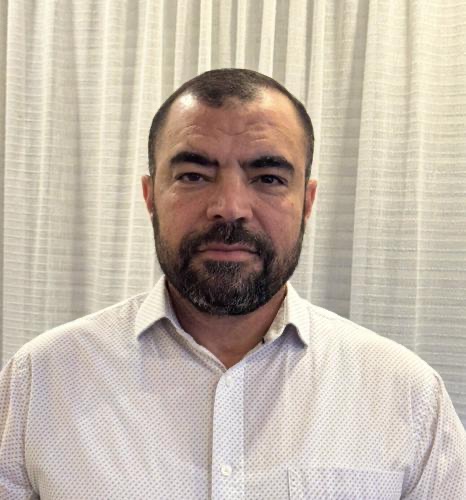
Throughout his nine years in Canada, Ottawa resident Khaled Mohamed has gone through — and passed — three extensive security checks by multiple federal agencies, including one for a job to handle sensitive personal data at the Immigration Department.
Yet, he’s faced with a fourth vetting, this time for his citizenship application, which has already been in the system for 18 months — pending security clearance.
“I respect Canada’s national security requirements,” said Mohamed, 55, a former lawyer and MP in Egypt, who fled political persecution and arrived here for asylum in 2017 by way of Qatar.
“I never imagined that an immigration journey could involve almost a decade of repeated administrative and security-related processes concerning the same individual, involving years of government work and resources, despite successive favourable assessments.”
While Mohamed has no issue with Canada’s repeated security checks, he hopes officials could at least expedite it for those who have already gone through it and been cleared multiple times. With the system already overwhelmed by backlogs, processing delays due to security screenings are causing tremendous stress on applicants.
Mohamed said his drawn-out citizenship processing delay has cost him job opportunities and the repeat screening has exhausted him, leaving him stressed and on doctor-prescribed medication.
Immigration security screening has garnered growing public attention in the last few years as the number of immigration applications skyrocketed after the pandemic, leading to an explosion of files flagged for inadmissibility and security concerns.
While critics question whether the process is rigorous enough, advocates complain that it takes too long and is holding back the lives of migrants, whether they are here for asylum, to study or work, or in the process of becoming permanent residents or citizens.
How immigration security checks work
Canada’s immigration screening program is managed by the Immigration Department, Canada Border Services Agency (CBSA) and Canadian Security Intelligence Service (CSIS). Immigration officials refer applicants to the CBSA and CSIS if they have concerns over an individual’s potential involvement in war crimes, crimes against humanity or organized crimes, or being a threat to national security.
The two organizations conduct independent investigations and report back to the Immigration Department, which ultimately decides if the applicant is admissible.
According to CSIS, the number of immigration security screening requests it receives increased from 356,200 in 2019 to a peak of 538,100 in 2024, before it dropped to 438,600 last year after Ottawa reduced immigration intakes. The border agency said its current caseload includes 69,800 applications for temporary residence, 31,300 for permanent residence and 73,400 for refugee claims.
The Immigration Department estimated that it would take 64.8 months to complete all security screenings for permanent residence and 30.3 months for temporary residence, based on output and the number of cases in the system as of the end of November.
Toronto immigration lawyer Max Berger said the stakes are high in citizenship applications because once a person becomes a citizen, it’s difficult to strip it. However, he said the screening process has been plagued by a lack of resources and transparency, causing extensive delays and leaving people in uncertainty.
He said multiple security screenings are not necessary unless new information emerges that suggests a person was involved in nefarious activities in their home country that officials weren’t aware of before.
“Obviously, that should dictate a fresh investigation,” said Berger, co-president of the Canadian Immigration Lawyers Association. “It causes delays and backup in the system, and endless headaches for clients ... The previous comprehensive security screenings should be adequate. Otherwise, you’re saying that they were worthless and we have to start again.”
Three security checks, three clearances
Mohamed is no stranger to the security screening process, which includes interviews and thorough documentations.
He practised law for more than two decades and was a law-school professor before he ran for public office after the fall of President Hosni Mubarak in 2011. He was a member of the Freedom and Justice Party and briefly served as an MP in the Egyptian parliament, which was dissolved in a military coup in 2013, forcing him to flee.
After spending four years in limbo in Qatar, Mohamed came to Canada with his wife and three daughters in August 2017, made a refugee claim and underwent his first security screening. All adult asylum seekers must pass a mandatory front-end security screening by the border and intelligence agencies before their claims are forwarded to the refugee board.
He was cleared and granted protection in Canada after almost two years, in July 2019. He immediately applied for permanent residence, but again was flagged for security checks by the very same agencies.
It took him more than three years to be cleared by the little-known Centre of Expertise in Security Cases, an internal specialized unit within the Immigration Department tasked with admissibility decisions. He became a permanent resident in February 2023.
In its report, the centre examined Mohamed’s role in the Freedom and Justice Party and its relationship with the Egyptian Muslim Brotherhood, a designated terrorist organization in Egypt, in connection to the protests that led to the fall of Mubarak’s regime. It also weighed his circumstances and assessed if he violated any of the provisions on security and subversion of a government in Canadian immigration law.
The report said neither had the Freedom and Justice Party subverted the Egyptian government by force nor was it an organization that has participated in or will participate in terrorism. As a result, Mohamed was found not to be “a risk to Canadian security due to his former membership and participation in the Freedom and Justice Party.”
After completing a college program to be a paralegal here, Mohamed applied for jobs at the Immigration Department and had to go through the standard federal personnel security screening process. He got his 10-year “reliability status” granted within two months and started working for the department as a program assistant in 2024.
While an immigration employee, he applied for his Canadian citizenship. He was let go last year due to federal budget cuts and now drives an Uber for a living in part because he can’t afford the professional fees to work as a paralegal.
Mohamed said officials have not asked for additional documents, information, travel history, employment history or other materials for the security screening of his citizenship application. The only thing requested was new fingerprints due to the expiry of his criminality check.
The Immigration Department declined to address how the vetting processes vary for asylum seekers, applicants for temporary and permanent residence and citizenship candidates in order to “protect the integrity” of the security screening programs.
Gaps in Canada’s security screening have been in the spotlight in recent years. A father and son from Egypt with alleged ties with terrorist group ISIS were granted permanent residence and became citizens, and were later charged with plotting a violent Toronto terrorist attack in 2024. Senior officials and ex-officials of the Iranian regime have been found in Canada despite Ottawa’s official ban in 2022.
Last year, a government report to Parliament said the Immigration Department between April 2016 and October 2025 initiated nine citizenship investigations into individuals suspected of involvement in war crimes, crimes against humanity and/or genocide.
Do prior security checks get remembered?
The Immigration Department said it referred Mohamed’s application for security screening in March 2025 as part of a routine program requirement applied consistently across citizenship applications against anyone aged 15.5 years and older. It said Mohamed’s security clearance is ongoing.
The department said it “recognizes the patience applicants demonstrate and the trust they place in Canada’s immigration system. We understand that waiting for a decision can be a significant source of stress and uncertainty.”
Mohamed said every security screening puts him under tremendous stress and his doctor has put him on Escitalopram, a prescription antidepressant, since 2021. He said the current delay in his citizenship processing has already cost him a potential job at Global Affairs Canada and a job offer as a legal adviser in Qatar. (The former required Canadian citizenship while the latter involved travel and Mohamed can’t get an Egyptian or Canadian passport.)
“I don’t know what I can do,” said Mohamed, who has not travelled since arriving here in 2017. “Citizenship is a freedom. Right now I am not belonging to any country. I’m not arguing that security screening should only occur once. But previous governmental (security) assessments should at least form part of the institutional memory.”
Writer
KLHIISA is a registered Non-Profit Organization.