Loading...
Decrease in temporary residents weakening demand and investment in rental property, economists sayWhile economic uncertainty from fluctuating oil prices and U.S. tariffs is contributing to B.C.'s real...

KLHIISA
Writer
Decrease in temporary residents weakening demand and investment in rental property, economists say
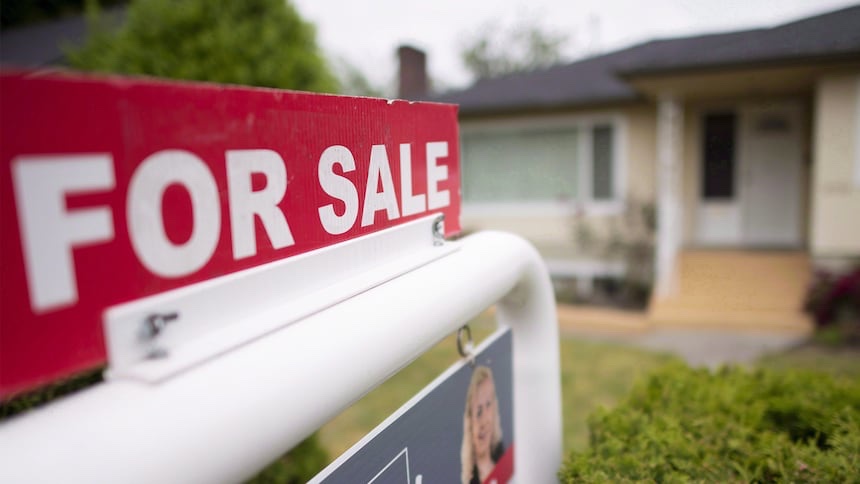
While economic uncertainty from fluctuating oil prices and U.S. tariffs is contributing to B.C.'s real estate slowdown, economists say immigration policy changes are also playing a part.
Greater Vancouver Realtors (GVR) marked a slower summer in home sales than it forecasted earlier this year, with sales 6.2 per cent below its year-to-year forecast for the region and 18.6 per cent below its 10-year average for July.
The B.C. Real Estate Association (BCREA) also reported a 6.7 per cent decline in July home sales compared to the previous year, along with slight declines in average price and total sales.
"Instead of growth, we're calling for a little bit of 'degrowth' in prices for the year," said Andrew Lis, chief economist with GVR.
Multiple factors are contributing to the slowdown, economists like Lis say, with oil price fluctuations from the U.S. and Israel-Iran war and U.S. tariffs creating economic uncertainty.
"Tariffs can cause harm to the economy, and also uncertainty, both of which are bad for the housing market," said Thomas Davidoff, an associate professor at the University of B.C.'s Sauder School of Business.
B.C. home sales fell in March; more uncertainty predicted this summer
The federal government announced in 2024 that it would reduce temporary residents and cap international student permits, among other changes, in a bid to manage immigration levels.
That's led to a reduction in the number of renters in B.C. In April, the province estimated the population decreased by 53,270 people from the year before. It also estimated the number of study-permit holders fell by nearly 30 per cent, from 141,806 to 99,862.
"The primary driver of B.C.'s decline in [non-permanent residents] over the last 12 months was a sharp reduction in the number of study permit holders residing in the province," the province said in a report.
Meanwhile, there were more than 26,000 new registrations of purpose-built rentals in 2025, according to the province, more than 10 times the average number of yearly purpose-built registrations from 2007 to 2016.
The province also said efforts to "return" short-term rentals to the market led to a drop in short-term rental listings, from about 28,000 to just over 23,000.
"We're sort of in a different position now where our population is declining and all that new supply is finally coming online," said Ryan Wyse, market intelligence manager and lead analyst at Rennie.
"With rental rates kind of falling right now as that market has shifted, we're seeing less condo investors who want to get into rental themselves, less of those mom-and-pop investors."
"Since migrants are a primary source of demand for rental units in major centres, the uptake of new rental inventory will likely stay below previous levels," it said, adding that demand has gone down as rental units are set to be completed in the next few years.
Amit Sidhu, an economist with the BCREA, said people need certainty before making a big purchase.
"Purchasing a home is a really big financial decision for a lot of people," said Sidhu. "Ordinarily they want a lot of clarity in terms of like the economic landscape before entering the market — and that's just sorely been missing for the past several quarters."
Wyse echoed Sidhu's observation of potential buyers' hesitance in the current climate, citing affordability concerns and a relatively weak labour market.
"I think that there's a lot of people who aren't all that eager to, you know, make a major financial purchase right now," he said.
While the slowdown is good for potential buyers, Lis said many may be keeping an eye out for changes to interest rates. In July, the Bank of Canada kept the key interest rate at 2.25 per cent.
Almost 70,000 people left B.C. last year — mostly for Alberta
Asking rents drop again, but B.C. remains among Canada's most expensive markets
"Currently, expectations are that interest rates will likely stay fairly flat and possibly upward into 2027," he said.
"So from that side of the equation, you know, buyers are still sort of in a bit of a standstill — but, [on] everything else, it's really been quite favourable for buyers."
How immigration changes are contributing to B.C.'s housing market slowdown
Writer
KLHIISA is a registered Non-Profit Organization.