Loading...
Anjali Menezes quit the board in June after three years, says her trust in the institution is 'extinguished'Anjali Menezes thought she had a lot to offer when she applied to join the Hamilton Police S...

KLHIISA
Writer
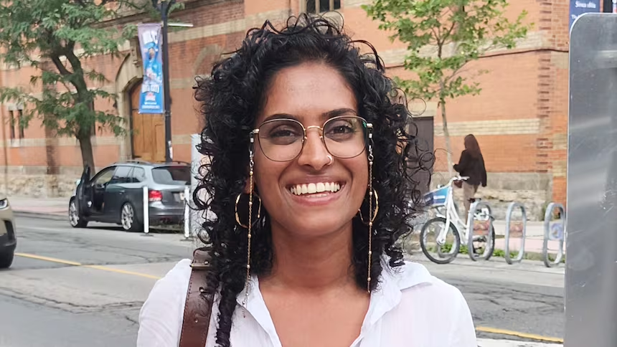
Anjali Menezes quit the board in June after three years, says her trust in the institution is 'extinguished'
Anjali Menezes thought she had a lot to offer when she applied to join the Hamilton Police Services Board. Now, after three years on the board, she sees the organization's culture as "immovable," saying critical voices like hers simply aren't welcome.
The family doctor got the idea of joining the board after witnessing negative impacts of police interactions on her racialized patients, and documenting other barriers for racialized people through her anti-racism research. She thought expertise like hers could help the board better serve a diverse population.
After trying to bring those perspectives to the board table, she's given up on using that route to make change. Menezes resigned from her board position June 25, saying her trust in the institution was "extinguished" and that her colleagues there "systematically marginalized and silenced" her voice.
"There's a difference between running head-first into a brick wall and hoping to make a crack for the next person before you pass out, and running head-first into a stainless steel wall [where] there's no crack that's going to be made," she told CBC Hamilton in a recent interview. "That is the analogy that I think would explain [my time] on the board."
In a letter she shared widely and sent to Hamilton city council, she said her efforts to improve the board's approach to hate crimes, hate group organizing and extremism were shut down by other board members.
Menezes told CBC Hamilton attempts to get the Hamilton Police Service to document officer breaches of the Charter of Rights and Freedoms, such as the right not to be racially profiled, the right to a lawyer or the right not to be searched without a warrant, were "sitting in governance committee waiting to be reviewed" and said the committee rarely meets.
Last-minute additions and changes a problem, says Menezes
She pointed to a recent meeting of that governance committee as an example of the lack of transparency she witnessed on the board.
A meeting in July was posted with a start time of 11 a.m., but then started at 10:30 a.m. without public notice. Police services board executive director Kirsten Stevenson sent out a press release the next day apologizing for the error, saying the start time had been published incorrectly.
Menezes says it allowed that committee to operate without scrutiny and acts as a barrier for members of the public who want to get involved.
She told CBC that important additions to agendas often came within 24 hours of meetings, making it difficult to read the documents in time. She said a community advisory panel on race-based data completed their report two weeks before the meeting where it was to be discussed, yet it was only shared with board members the day before that meeting.
CBC Hamilton contacted the police services board for comment and shared the allegations in this story. Executive director Kirsten Stevenson said that only chair Don Robertson could respond on its behalf. He has not responded.
Former member says animosity began before she was appointed
Menezes said her challenges on the board seemed to begin before she was appointed. She was the first citizen appointee chosen to the board from a hybrid committee composed of both councillors and equity-seeking community representatives.
During that process, fellow board member and city councillor Esther Pauls quit the selection committee over concerns it was not going to re-appoint its former citizen representative, Fred Bennink.
A report from the city's integrity commissioner David Boghosian quotes selection committee member Coun. Nrinder Nann saying Pauls was "against the inclusiveness process." The report includes similar recollections from other members of the committee.
Committee member Andrea Purnell recalled Pauls was "very upset during the meeting… to the point of abruptly slamming her computer shut and leaving." Pauls' son John Pauls is a senior Hamilton police officer.
Menezes believes Pauls' attitude toward her appointment continued when they became board colleagues, saying that as a senior member, newer appointees looked to Pauls to understand the board's interpersonal dynamics.
Menezes says several members of the board, including Pauls, and several senior police officers, did not learn how to say her name over her three years there, an indignity commonly experienced by racialized people.
"In the past few months, it just turned to them never even referring to my name," she said. "I'm referred to as 'the member.'"
Pauls did not respond to a direct request for comment.
Expert agrees with call for independent oversight
Alok Mukherjee, the former chair of the Toronto Police Board, says that from his observations and conversations he's had with Menezes, it seems the Hamilton Police Board did not "understand the community-based roots of someone like Anjali, who saw herself to be trying to promote and advocate the interests of the community, especially the racialized communities."
He says the process by which board members are selected tends to dictate its leanings, saying citizen appointees are often "political" in nature and tend to share the views of police rather than community members critical of them.
"The police board is supposed to be providing independent oversight to keep the police accountable [and] create policies that serve the public," he said. "If you choose people who don’t understand those things, they come too close to the police service and see themselves as serving the police versus serving the public."
Menezes is calling called for an independent administrator to take over oversight of the police board, a move that Mukherjee agrees with, saying it could help develop a "better" system of police governance and establish a new board. This happened in Thunder Bay in 2022 and resulted in a board more in tune with the concerns of First Nations in that community, he said.
Robertson, the board chair, disagrees, noting in a release issued the day after Menezes' resignation that a representative of the Inspectorate of Policing, an oversight body for police boards, already attends the board's meetings.
Menezes has complained to the Inspectorate about her treatment, and says the results of that complaint are still pending.
"Dr. Menezes has been sharing many of her own opinions, which is certainly her right. If complaints or concerns have been submitted to the Inspectorate of Policing, I will not be able to comment further on these matters to ensure the integrity of the process," Robertson's statement said.
Is change possible on Hamilton police board? Former member says 'immovable' culture prevents it
Writer
KLHIISA is a registered Non-Profit Organization.