Loading...
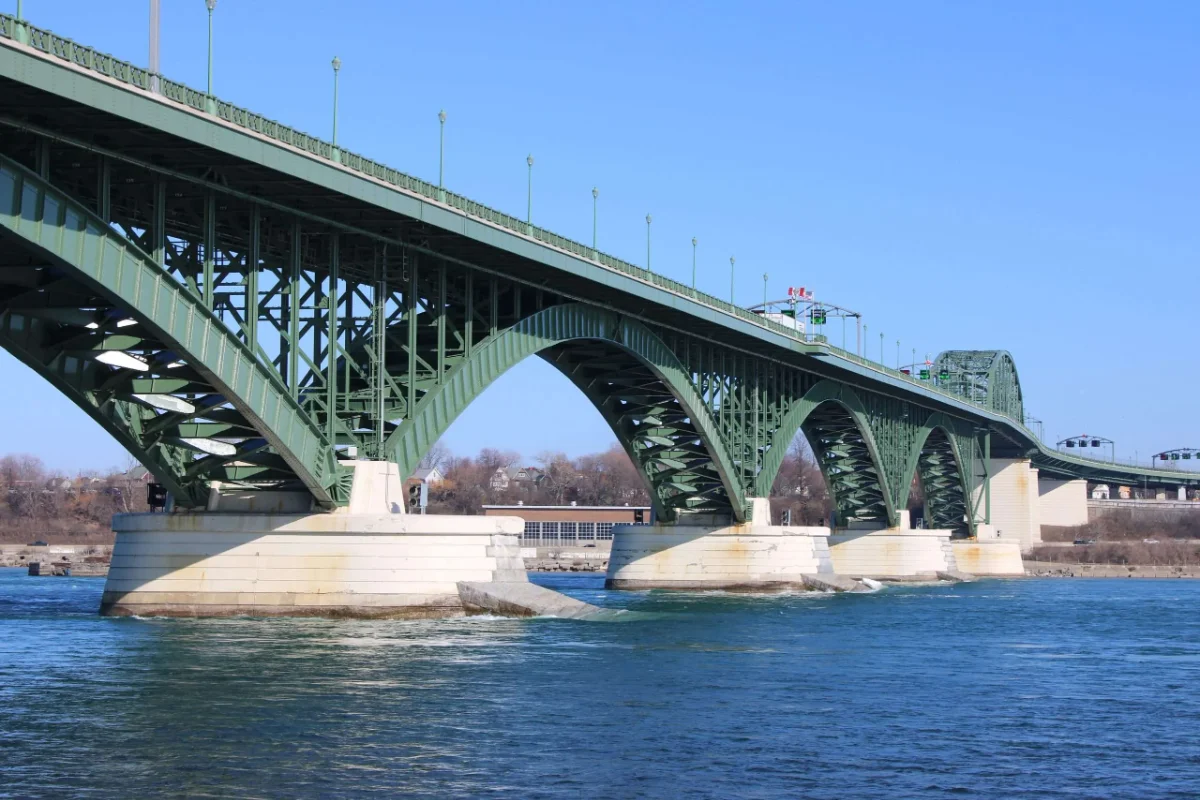
A Federal Court challenge filed June 17 accuses Peace Bridge officers of unlawfully denying a mother’s asylum claim and sending her family to a U.S. Immigration and Customs Enforcement (ICE) detention facility, where they were held for two weeks.

KLHIISA
Writer
Andrew Hawlitzky June 22, 2026 Fort Erie Radio
A Federal Court challenge filed June 17 accuses Peace Bridge officers of unlawfully denying a mother’s asylum claim and sending her family to a U.S. Immigration and Customs Enforcement (ICE) detention facility, where they were held for two weeks.
Last week, the Canadian Council for Refugees (CCR) and Amnesty International Canada filed the case on the Honduran family’s behalf, stating the mother had every reason to fear what would happen to her if sent back.
Both groups claim Canadian border officers routinely fail to check whether ICE agents would detain asylum seekers or deport them to a country where they could be killed.
The CCR identified the family using the names Carlos, Antonia and their six-year-old son Alejandro, names the organization says it changed to protect the family’s identity.
The family fled Honduras in 2021 after gang members repeatedly attacked and threatened Carlos over extortion payments. They reached the United States in 2022 and settled in Maryland while waiting for an asylum hearing that kept getting delayed.
“We were in constant fear, every time we had to cross the border and travel with a young child,” Antonia said in a statement released by the CCR. “We were terrified.”
The family’s pending U.S. asylum claim was cancelled in March 2025, two months into Donald Trump’s second term as U.S. president, as his administration suspended new asylum claims at the border and moved to overhaul the country’s immigration system.
The Canada Border Services Agency (CBSA) returned 3,282 people to the United States under the Safe Third Country Agreement in 2025, up from 2,481 over the same period in 2024.
Carlos has two brothers and a sister living in Canada, which is why the family chose to seek asylum in Fort Erie rather than fight their case in the U.S. They arrived at the Peace Bridge on April 4, 2025.
“We were fearful, not knowing what we would face when we approached the border,” Carlos said.
“But when we saw the Canadian flag there at the bridge, we felt a certain sense of relief.”
A CBSA officer at the Peace Bridge told the family that Carlos and Alejandro could enter Canada because Carlos has siblings here, but Antonia could not, since Canada requires the family tie to belong to the person seeking entry.
Carlos told the officer their U.S. asylum claim had already been cancelled and that Antonia would face detention and deportation back to Honduras if sent back. The officer told him to inform Antonia she would not be allowed into Canada.
“I said, ‘What am I supposed to tell my son about why they’re not going to let his mother come in with us,'” Carlos said. “And the border officer just said, ‘That’s your problem, you’ve got 20 minutes to make a decision.'”
The family chose to stay together and crossed back into the United States. U.S. agents held them in a windowless room for five days with little food and no opportunity to shower, then transferred them to an ICE detention centre in Dilley, Texas, where Antonia and Alejandro were separated from Carlos.
“Spending 15 days locked up in that detention centre was witnessing human dignity vanish behind bars,” Antonia said. “The hardest part wasn’t the cold or the food; it was looking into our six-year-old son’s eyes and having no answers.”
U.S. officials deported the family to Honduras without assessing their asylum claim. They have lived in hiding since, fearing the same gang that drove them out in the first place.
“We wish we could show our faces and shout to the world and let everyone know that this is what happened to us,” Carlos said. “But we are doing what we can to fight this.”
Last October, the CBSA deported a Fort Erie family of 10, Taiwo Fayemi and her nine children, to Nigeria after rejecting their refugee claim. Neighbours and the children’s soccer teammates wrote letters appealing the decision before the family left.
Unlike the Fayemi case, the Honduran family was turned back at the border before any hearing took place.
Martha Mason, executive director of the Fort Erie Multicultural Centre, spoke publicly in support of the Fayemi family last year. The same centre operates the Peace Bridge Newcomer Centre, where asylum seekers who do enter Canada through Fort Erie first seek help.
Source: https://forterieradio.ca/peace-bridge-officers-accused-of-unlawfully-denying-family-asylum/
Writer
KLHIISA is a registered Non-Profit Organization.