Loading...
'This should be a wakeup call for the Carney administration,' says NDP immigration critic Jenny Kwan, and Canada should reset its immigration levels to ensure Canada’s long-term growth.Canada’s centra...

KLHIISA
Writer
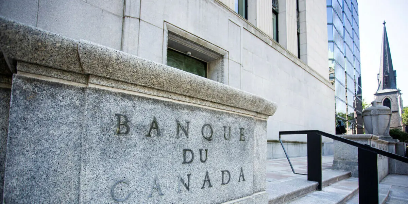
'This should be a wakeup call for the Carney administration,' says NDP immigration critic Jenny Kwan, and Canada should reset its immigration levels to ensure Canada’s long-term growth.
Canada’s central bank says the economy “won’t grow as fast” due to “less immigration” in the coming years, and that labour shortages, due to the lack of young workers, could drive up inflation, according to a new analysis published on Oct. 8, and just ahead of the federal government’s anticipated release of its new immigration levels plan. While critics say this should be a “wakeup call” for the Carney government, one economist calls the Bank of Canada’s conclusion “problematic.”
The report, titled “Demographic changes are reshaping the Canadian economy,” by the Bank of Canada says an older population and fewer immigrants are changing the economy by shrinking the workforce and shifting what people consume.
“In the coming years, fewer immigrants are expected to arrive, which will reduce demand for housing. This could lower pressure on housing costs. At the same time, less immigration will mean fewer workers and weaker demand for other goods and services. The economy won’t grow as fast as a result,” it reads.
“There are two main reasons why Canada’s population growth is slowing. The population is aging. For several decades, Canada’s birth rate has been below the level needed to replace the population. Fewer immigrants are coming to Canada. After a significant increase in the early 2020s, immigration levels have begun to decline as policies have adjusted,” it states.
The report is part of a series on how changes in technology, demographics, and international trade are transforming the Canadian economy. It underlines that while the Bank of Canada does not have a role in making immigration policy, demographics matter in making monetary policy decisions as they influence key drivers of the economy, including production and demand, which affect economic growth and inflation.
“To keep inflation at or around our two-per-cent target, it’s essential that we understand how demographic changes are shaping the economy,” the article says.
According to the Bank of Canada, several factors, including many temporary residents leaving Canada, fewer new immigrants expected to arrive in Canada in the upcoming years due to the federal government’s reduction of immigration levels, as well as the Canadian population continuing to get older, “will affect the size of our workforce, what we buy, and how much the economy can produce.”
Some opposition MPs and immigration advocates have been calling on the government to increase immigration levels, while Conservatives are urging the government to make further cuts.
NDP MP Jenny Kwan (Vancouver East, B.C.), her party’s immigration critic, told The Hill Times that the Bank of Canada’s conclusion echoes what her party and many advocates had predicted.
“Immigrants are workers, entrepreneurs, consumers, researchers and members of our communities. They contribute to economic activity, help address labour shortages and support the tax base that funds public services, including pensions,” she said.
Kwan argued that Canada needs to reset its immigration levels “in light of this policy reality” to ensure Canada’s long-term growth.
“The question is whether the government is prepared to listen to the evidence and reconsider an approach that risks constraining Canada’s economic potential,” she said.
“This should be a wakeup call for the Carney administration.”
Immigration Minister Lena Metlege Diab (Halifax West, N.S.) is required to table Canada’s 2027–29 Immigration Levels Plan for the next three years on Nov. 1.
The current Immigration Levels Plan covering 2026–28 aims to reduce the temporary population to less than five per cent of the population by the end of 2027, and keep the number of permanent resident admissions at less than one per cent of the population after that.
Conservative MP Michelle Rempel Garner (Calgary Nose Hill, Alta.), her party’s immigration critic, did not respond to The Hill Times’ request for a comment, but speaking to the media on Sept. 30, she said that Conservatives will continue to press for major decreases in immigration levels.
“Let me be perfectly clear, the Conservative Party of Canada will vigorously oppose any efforts by Prime Minister Carney and his Liberal government to increase immigration and continue their reckless mass migration policies,” she said.
“Conservatives expect immigration levels to be set much, much lower in the upcoming immigration levels [plan]. That’s because the Liberals keep allowing too many people in too fast for housing, health care and jobs to keep up.”
Carney says feds are looking at a ‘controlled increase’ in immigration
Prime Minister Mark Carney (Nepean, Ont.) said in a Sept. 27 interview with The New York Times that Canada’s immigration system is back under control, and is looking at when to begin a “controlled increase” of the country’s population.
“Now the question starts to become, when do we resume some controlled increase in the population, which is the nature of Canada?” he said.
“So that will happen, and we just want to make sure that we’ve got it under control.”
The Bank of Canada report argues that many immigrants are young and that they often begin contributing to the economy, with temporary workers getting jobs in areas where there are labour shortages, such as in the restaurant and agriculture sectors. Highly skilled immigrants, meanwhile, go into fields such as computer engineering, where the report says there is a short supply of talent.
It also refers to Canada’s aging population as a factor, arguing there will be fewer young people replacing retired people in the workforce.
“A smaller workforce means the economy won’t produce as much. Labour shortages could push up wages in some sectors, which could affect prices and contribute to inflation,” reads the report.
Adrienne Smith, a lawyer specializing in citizenship and immigration law and an adjunct law professor at the University of Toronto, echoed Kwan’s point. Describing the Bank of Canada’s conclusion as a “warning,” she argued that the government needs to create permanent residency options for immigrants to increase population growth.
“Most immigrants who come to Canada are disproportionately younger than the average Canadian. In addition to adding demand in the economy because of their stage of life, immigrants add unseen value through culture and supporting their communities and families who are already in Canada,” Smith said.
Many immigration lawyers are concerned about whether the increase in levels will impact the many highly skilled workers who live and work in Canada, but currently have no pathway to permanent residency, according to Smith.
“The government now needs to shift its focus to growing the economy and recognizing the important role immigrants can play in that growth,” she said.
“Highly skilled workers and executives who have been living and working in Canada for years are unable to qualify for permanent residency, despite their significant contributions to the Canadian economy,” said Smith.
Bank’s conclusion ‘problematic,’ says labour economist
Mikal Skuterud, a labour economist at the University of Waterloo and research fellow at the C.D. Howe Institute, told The Hill Times that the Bank of Canada’s use of the term is not consistent with how most economists define economic growth. He argued that the “implicit link here being made between immigration and labour shortages” is “problematic.”
“It’s not necessarily true that when you reduce immigration rates, that exacerbates labour shortages. So I will say, at the macro level, that may very well not be true,” he said.
Skuterud argued that there is a “perception” the federal government has significantly cut back on immigration, but also said “that is not true.”
Skuterud said the Statistics Canada data is being misinterpreted when asked how it feeds into that perception.
“What is happening is that the net migration numbers are at a historic low, not because the inflow has been cut back, but because the government is trying to increase the outflow. There is a big difference between saying a decrease in immigration and a massive increase in outflow of non-permanent residents. With 380,000 immigrants, that’s about 0.9 per cent of the population being admitted as new immigrants every year over the next three years. That’s high immigration,” he explained.
A Sept. 23 report by Statistics Canada concluded the number of non-permanent residents — someone who lives in Canada with a work or a study permit, or has claimed refugee status, and their family members — dropped by 154,614 people between July 2025 and July 2026.
This is the largest decrease in the number of non-permanent residents over the span of a year since the organization started recording this data in 1971. This is also the first decline since the COVID-19 pandemic, as in 2020–21 the number dropped by 51,719 from the year before. According to data as of July 1, there were 2.78 million non-permanent residents in the country, which amounts to 6.7 per cent of Canada’s estimated population of 41.8 million people.
StatsCan also reported that Canada received 368,224 new permanent immigrants in the July 2025 to July 2026 period. This is the first time since 2021–22 that the annual number of immigrants has fallen below 400,000, consistent with Immigration, Refugees and Citizenship Canada’s (IRCC) lower immigration targets, the report said.
Peter Copeland, director of domestic policy at the Macdonald-Laurier Institute, told The Hill Times that he broadly agrees with the Bank of Canada’s description of the short-term economic effects, but said that its framing is “incomplete.” He said it “mistakenly suggests that aggregate gross domestic product and labour-force growth are the right policy objectives, rather than increasing productivity, GDP per capita, wages, housing affordability, and, ultimately, social integration.”
The elephant in the room, according to Copeland, is “overreliance” on immigration, and its “contribution to the neglect of domestic family formation and fertility,” which he says should be the principal driver of “modest and sustainable” population growth.
Copeland said a sudden decrease in immigrants means fewer additional workers and consumers, and therefore slower growth in aggregate GDP, “if all else is held equal.”
“But aggregate GDP is a poor measure of whether Canadians themselves are becoming more prosperous. What matters much more is productivity, GDP per capita, wages, housing affordability, social trust and integration,” he explained, adding that he disagrees with the notion that immigration is the only way to achieve economic growth.
Canada’s economy ‘won’t grow as fast’ in the future due to less immigration, Bank of Canada says
Writer
KLHIISA is a registered Non-Profit Organization.