Loading...
According to the 2021 Census of Population, over one in four (27%) people in Canada belong to a racialized group (Hou et al., 2023). The Employment Equity Act defines these individuals as “persons, ot...

KLHIISA
Writer
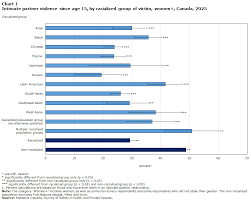
According to the 2021 Census of Population, over one in four (27%) people in Canada belong to a racialized group (Hou et al., 2023). The Employment Equity Act defines these individuals as “persons, other than Aboriginal peoples, who are non‑Caucasian in race or non‑white in colour.” Over the years, Canada’s racialized population has grown and diversified, driven largely by ongoing immigration (Hou et al., 2023). As the racialized population continues to grow, it is important to consider how different social and structural factors—such as economic conditions, neighbourhood environments and access to services—can shape the experiences of individuals in these communities. These factors can also contribute to differences in victimization patterns, both between racialized and non‑racialized populations, and among distinct racialized groups.
One form of violence that can affect people across racial, ethnic and socioeconomic groups is intimate partner violence (IPV). IPV encompasses a wide range of behaviours—including emotional, economic, psychological, physical and sexual violence—and remains a pervasive health concern affecting many individuals on an annual basis. While some groups of women and girls (e.g., Indigenous women, women with disabilities, younger women) are known to experience IPV at disproportionately higher rates (Heidinger, 2026; Heidinger, 2021; Savage, 2021a; Savage, 2021b),Note evidence suggests that women who belong to a racialized group may experience IPV in different ways (Cotter, 2026; Cotter, 2021b; Okeke-Ihejirika et al., 2020). These differences may be influenced by factors such as cultural context, systemic barriers and access to supports, as well as sociodemographic characteristics such as age and immigrant status (e.g., immigrant, non-permanent resident). Understanding these variations in experiences is essential for accurately assessing the prevalence and nature of IPV within the racialized population and for developing responses and prevention strategies to IPV that reflect the diverse realities of Canada’s racialized communities.
This article is one in a series of profiles that examines IPV among members of different population groups in Canada,Note based on self-reported data from the 2025 Survey of Safety in Public and Private Spaces (SSPPS). IPV is highly gendered, with women and girls comprising most victims; women and girls are also more likely to experience the most severe forms of violence and its associated negative consequences (Burczycka, 2016; Cotter, 2026; Cotter, 2021c; Cotter & Burczycka, 2026). As such, this article explores experiences of IPV that occurred in the respondent’s lifetime (i.e., since the age of 15) as well as in the 12 months prior to the survey —including the prevalence, nature, frequency and impacts—among racialized women.Note Note Comparisons to experiences of IPV among non-racialized women are made throughout the article.
This series of profiles on intimate partner violence were produced with funding support from Women and Gender Equality Canada.
Defining the racialized population in the Survey of Safety in Public and Private Spaces
In this article, the “racialized population” is based on responses to the population group question in the Survey of Safety in Public and Private Spaces. Those who identified as South Asian, Chinese, Black, Filipino, Arab, Latin American, Southeast Asian, West Asian, Korean and Japanese, are designated as visible minorities based on the definition in the Employment Equity Act. Respondents do not self-identify as racialized, but rather the category is derived by the survey for analytical purposes. As the racialized population is not homogenous, results are disaggregated by racialized group where possible, to capture the unique experiences of the racialized population in Canada. The non-racialized population excludes individuals who identified as First Nations people, Métis or Inuit (Indigenous). This is a notable definition change from previous analyses on the racialized population using the SSPPS, which included Indigenous people in the non-racialized population group.Note
It is also important to note some of the demographic differences between racialized and non-racialized women, as they should be considered when examining women’s experiences of IPV. For instance, in the 2025 SSPPS, racialized women were younger (40% were aged 15 to 34 years, compared with 26% of non-racialized women), more likely to be employed (70% versus 63%), more likely to have a university certificate or diploma or higher (50% versus 37%), much more likely to be immigrants (80% versus 11%), and more likely to be single (34% versus 25%). These findings are consistent with what was noted in the 2018 SSPPS (Cotter, 2021b).
Intimate partner violence: Experiences of racialized women in Canada, 2025
Writer
KLHIISA is a registered Non-Profit Organization.