Loading...
With fewer spots for permanent residency, French is looking more appealingRavinder Kumar hopes the French lessons he's taking will help improve his chances of gaining permanent residency in Canada, an...

KLHIISA
Writer
With fewer spots for permanent residency, French is looking more appealing
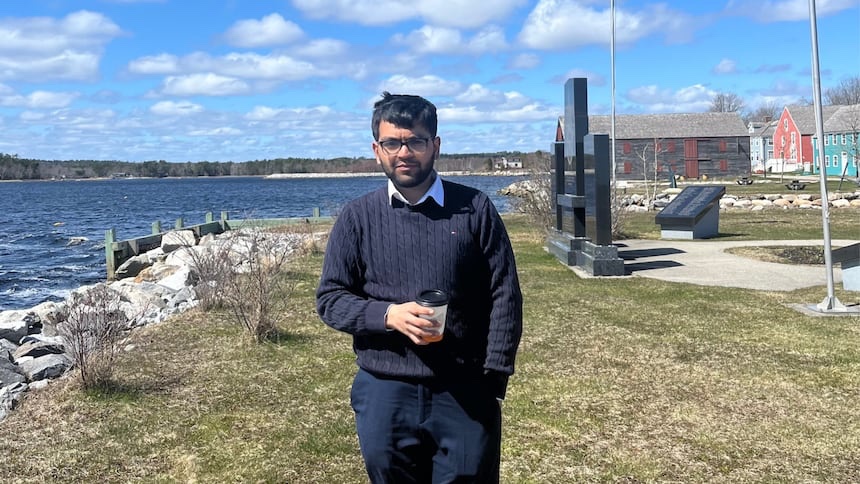
Ravinder Kumar hopes the French lessons he's taking will help improve his chances of gaining permanent residency in Canada, and he's not the only one. Kumar moved from India to Canada to study in 2021. After graduating from business school in Montreal in 2024, he found a job in Halifax with an employer approved under the Atlantic Immigration Program, which offers a route to permanent residency for skilled foreign workers living in the region. But almost a year into the job, Kumar said his employer pulled out of the program. “The employer doesn't have any repercussions,” he said. “But I had a lot of repercussions. The time, the most valuable thing, was lost.” While he found a new job, he said the company is not approved under the program, meaning he has to look for other ways to gain permanent residency — and do it quickly.
Kumar’s post-graduation work permit expires in May 2027.
He was already learning French for personal reasons when he realized the language might help him extend his stay and maybe score some extra points toward permanent residency. “I started learning French at Université Sainte-Anne. It's like twice or three times a week in the evenings,” he said. According to Canada's 2027-29 Immigration Levels Plan, the federal government is increasing French-speaking permanent resident admissions over the next few years to ensure "the vitality and economic development of Francophone Minority Communities." Applicants for permanent residency are ranked under a points system. Proficiency in one of Canada’s official languages is worth up to 136 points, while knowledge of a second official language can add up to 24 more.
Every point can make a difference, especially with fewer permanent residency spots available. The target for new permanent residents in 2026 is 380,000. By comparison, Canada admitted 483,640 new permanent residents in 2024 and 393,770 in 2025, according to Immigration, Refugees and Citizenship Canada. Many immigrants hope to stay in Canada as permanent residents and eventually gain citizenship.
Souhaël Bouallagui, director of French as a second language for the school at the Université Sainte-Anne, has seen the number of newcomers learning French for immigration reasons skyrocket. He said he does not have an exact figure because the school does not track why students enrol. What the school does track is the number of people taking the French tests required for immigration: the Test d'Évaluation de Français and the Test de Connaissance du Français. Bouallagui said that two or three years ago, the university offered the exams about once a month. Now it offers them twice a week.
“We could even offer more sessions if we had the capacity for it because people really need, really want to take that exam to prove their French proficiency,” said Bouallagui. He said many students take the exam multiple times to get the best score possible, a process that can cost hundreds of dollars. Kumar, for example, took the test three times. He passed and has been waiting for updates on his application. In some cases, Bouallagui said people come to the school hoping to rush through French lessons in a couple of months before their status ends. “It's really hard to see the desperation of some people because it's their whole life,” he said. “For some people, they came to Canada, they worked here and now they need to prove that they speak French on top of everything else to be able to stay here.”
Kumar said navigating the immigration process has added a lot of stress to his life, but he is determined to make it work. “I feel like it's taking a toll on my physical well-being. It's taking a toll on my sanity,” he said.
Why some immigrants in Halifax are learning French to score points for applications
Writer
KLHIISA is a registered Non-Profit Organization.