Loading...
Family sent back to Honduras accuses Ottawa of violating rights by handing them to U.S. — despite what they claim is Trump administration’s abuses. They arrived at a port of entry to Canada a year ago and pleaded with a border officer to let them in for asylum because they said they would face detention and deportation if returned to the United States.

KLHIISA
Writer
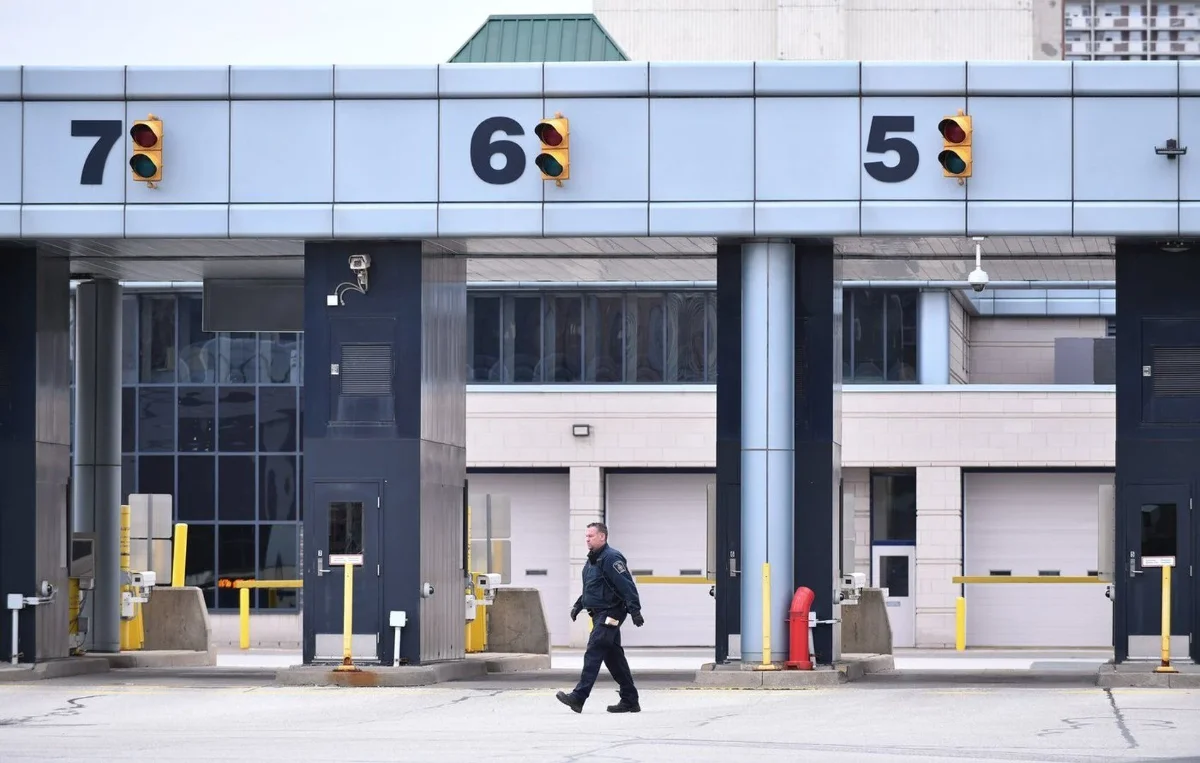
By Nicholas Keung, Toronto Star, June 18, 2026
Family sent back to Honduras accuses Ottawa of violating rights by handing them to U.S. — despite what they claim is Trump administration’s abuses.
They arrived at a port of entry to Canada a year ago and pleaded with a border officer to let them in for asylum because they said they would face detention and deportation if returned to the United States.
Coming to Canada, according to the family from Honduras, was the only option after their refugee claim in the U.S. was abruptly cancelled by the new Trump administration in 2025, and they would face removal to a country where they claimed they had been attacked and threatened by gang members.
When their request to access protection in Canada was denied, the couple and their six-year-old son returned to the U.S. and were immediately detained. They were later transferred to the notorious Dilley immigration processing centre in Texas and after two weeks, sent back to Honduras, where they are now in hiding.
Now, the family — identified in Federal Court documents as PR, RS and TU for their safety — has launched a constitutional challenge against the Canadian government. They accuse Ottawa of violating their rights by handing them over to the U.S. — despite what they claim is mounting evidence of rights abuses linked to the Trump administration’s agenda of mass detention and deportation.
By sending at-risk refugees back to danger in the U.S., the litigation alleges that Canada has failed to honour the terms of the bilateral asylum pact and ensure that returnees to the U.S. would not face rights violations. Those alleged violations include unfair detention, or the risk of being deported to another country where their rights or lives would be in danger.
The claim by the family has not been tested in court. A hearing date has not been scheduled, and the federal government has yet to file a response.
Under the Safe Third Country Agreement, in force since 2004, Canada and the U.S. each recognize the other country as a safe place to seek protection. It allows Canada to turn back potential refugees who arrive at its shared border on the basis they should pursue their claims in the States, the country where they first arrived. Those with close family members in the country are exempted from the ban.
The agreement has been the subject of several major constitutional challenges. Although the Supreme Court of Canada ruled in 2023 that the asylum pact did not violate the Charter, it said Ottawa must ensure that “safety valves” are made available to returnees to the U.S. to safeguard their rights. (Safety valves include protections against rights violations and access to judicial reviews.)
“Every day, people fleeing danger present themselves at the Canadian border expressing grave fears about what will happen to them if they are returned to the U.S.,” said Asma Faizi, president of the Canadian Council for Refugees, in a press release on Wednesday. The refugee council and Amnesty International are part of the legal action.
“While their fears are very real, the ‘safety valves’ supposedly offered by the Canadian government do not in practice exist and refugees’ pleas for protection are ignored.”
The lawsuit said there have been significant changes in law, policy and practice for refugees and refugee claimants in the U.S. since January 2025. when Trump returned to the White House. Not only has the detention regime been expanded, some classes of detainees don’t have access to release or to “meaningful review” of their circumstances.
“Claimants are routinely detained, face significant obstacles in contacting and retaining counsel, are repeatedly transferred between facilities and are given very little advance notice of their interview, and cannot provide documentation during the interview,” the lawsuit alleged.
There has been an increased reliance on removals to third countries, where due process is not guaranteed and the risk of sending them back to face harm in their home countries is real, it added.
“Refugees are being turned away at our borders and handed over to the U.S. system of cruelty and chaos,” Ketty Nivyabandi, secretary general of Amnesty International Canada’s English-speaking section, said in a statement.
“Instead of protecting people fleeing persecution, Canada is violating their rights and exposing them to harm. Canada must put an end to this unconscionable practice without delay.”
The applicants ask the Federal Court to order Ottawa to take all steps necessary to facilitate the Honduran family’s return to Canada and reassess their eligibility for asylum. They also request that any enforcement of removal of individuals connected to those ineligibility determinations must be fair, transparent and Charter-compliant.
The Canada Border Services Agency declined to comment on the case because a person’s immigration and border information is protected by the Privacy Act. However, it said when a claim is made at a port of entry, CBSA officers will conduct an examination — including an interview — and consider all related information to decide if the claim is eligible.
The Immigration Department said it cannot comment on matters before the court, but said the bilateral asylum pact remains an important tool for both countries to orderly manage asylum claims along the border. Officials continuously monitor developments in the U.S., assessing how policies are applied and their impact on Canada’s refugee system, it noted.
Writer
KLHIISA is a registered Non-Profit Organization.