Loading...
Canada could significantly expand its workforce by removing barriers that prevent internationally trained professionals from working in their fields, according to a new report by the Institute for Canadian Citizenship (ICC).

KLHIISA
Writer

‘The talent that is needed to address these challenges is already here’
By Jim Wilson 04 Jun. 2026 HC Mag
Canada could significantly expand its workforce by removing barriers that prevent internationally trained professionals from working in their fields, according to a new report by the Institute for Canadian Citizenship (ICC).
Authored by Kareem El-Assal, the report finds that foreign qualification recognition (FQR) challenges are leaving nearly 640,000 immigrant degree-holders—about 26 per cent—overqualified for their current jobs, more than double the rate among Canadian-born workers.
“The underemployment rate for their Canadian-born counterparts is just 11 per cent,” says El-Assal in the report titled Ready to Contribute. “This translates into a disproportionate number of immigrant physicians working as security guards, engineers driving for ride-share apps, and nurses sorting packages in warehouses. This waste of talent hurts all Canadians, not just immigrants.”
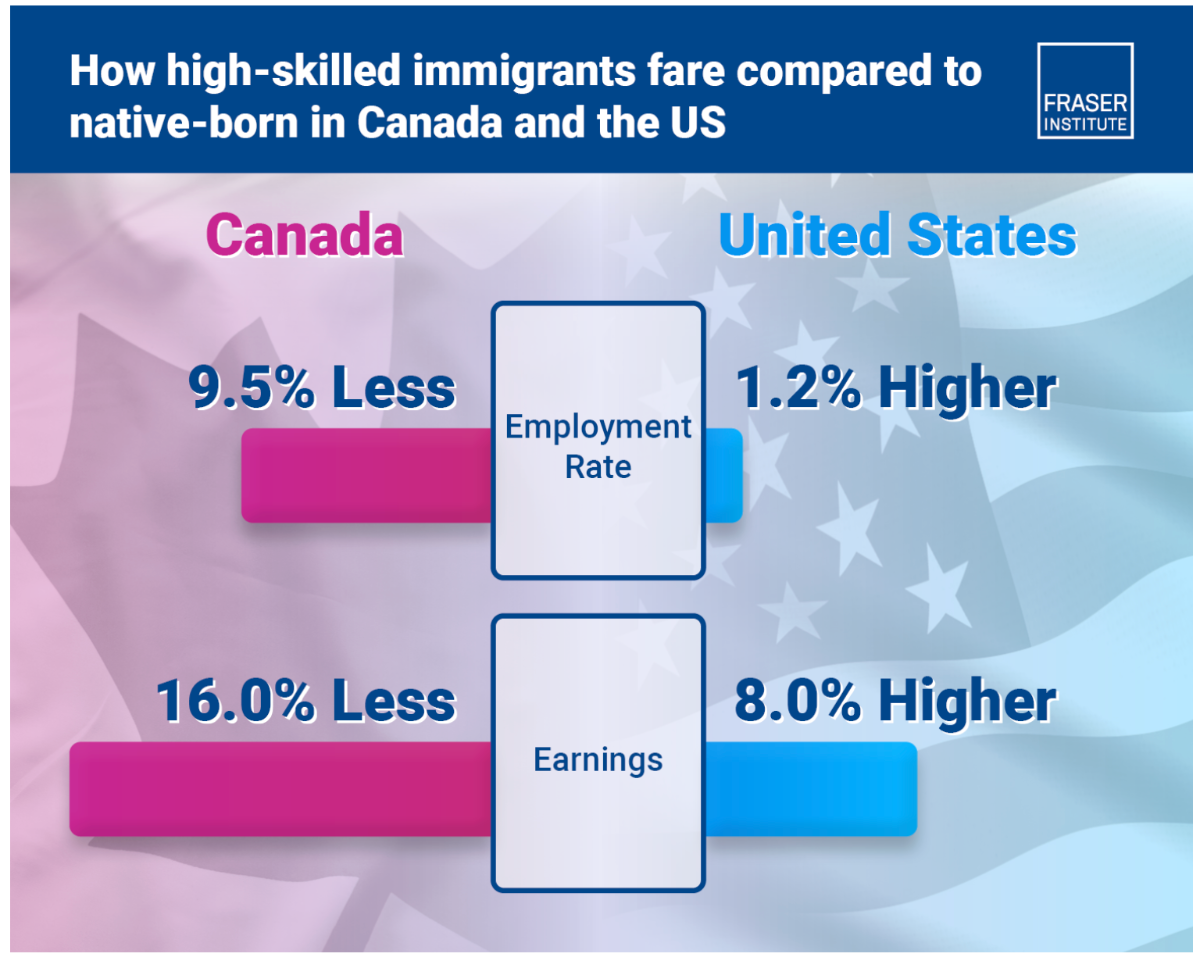
Highly educated immigrants in Canada are not achieving the same labour market success as their counterparts in the United States, according to a previous report from the Fraser Institute.
Healthcare shortages persist despite untapped talent
The ICC report highlights the impact of underemployment on Canada’s strained healthcare system, where millions lack access to care.
Only 41% of internationally trained physicians and 37 per cent of internationally trained nurses are working in their professions.
“Lowering the immigrant overqualification rate to match the national rate has the potential to add 27,000 nurses and related professionals and nearly 16,000 medical doctors to Canada’s workforce.
This illustrative example underscores the way in which immigrant underemployment impacts all Canadians, considering that 6.5 million Canadians do not have access to a family doctor.”
The report suggests that better integration of existing talent could help ease staffing shortages without increasing immigration levels.
The number of temporary foreign workers (TFWs) employed in Canada’s health care sector soared over a 20-year span, according to a previous report from Statistics Canada (StatCan). This number has jumped from just 3,200 in 2000 to 57,500 in 2022—a 17-fold increase over two decades, according to the report released in 2025.
Fragmented licensing system cited as key barrier
El-Assal attributes much of the problem to a fragmented licensing system involving hundreds of regulatory bodies across Canada.
“Foreign qualification recognition (FQR) is the process by which academic credentials, professional experience, and occupational qualifications obtained abroad are assessed and validated against Canadian standards… Yet in practice, the system does not function as intended.”
Among the most persistent barriers is the requirement for Canadian work experience.
“This Catch-22 demands Canadian experience before granting a licence, even in cases where a licence is required to obtain Canadian experience. The Ontario Human Rights Commission declared this practice discriminatory in 2013, yet it remains prevalent.”
El-Assal argues these structural barriers—not skill gaps—are the primary drivers of underemployment.
Economic costs and productivity concerns
The report also points to significant economic consequences from failing to use immigrant talent effectively. FQR barriers and related employment challenges cost Canada as much as $50 billion annually in lost economic potential.
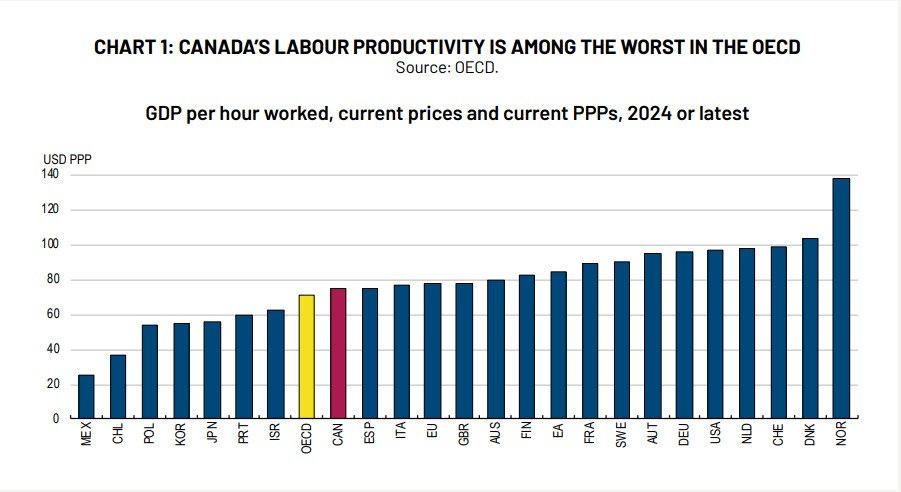
“RBC estimates that foreign qualification recognition barriers and related immigrant employment challenges cost Canada as much as $50 billion in lost economic potential annually. Canada’s labour productivity is already among the worst in the OECD, and FQR barriers are a significant contributing factor.”
El-Assal links these barriers directly to productivity challenges and broader economic performance.
Proposed federal legislation aims to drive reform
To address the issue, El-Assal proposes a federal Fair Licensing Act modelled on the Canada Health Act, tying funding to provincial progress on reducing barriers.
“It is time for a fresh approach capable of driving change across all professions, in all provinces, simultaneously.”
The proposed framework would link funding to improved licensing rates and employment outcomes for internationally trained professionals.
The report concludes that addressing credential barriers is essential to improving workforce efficiency and meeting Canada’s labour needs.
“Canada faces many challenges at present, and in many cases, the talent that is needed to address these challenges is already here. It is time to stop wasting it.”
Writer
KLHIISA is a registered Non-Profit Organization.