Loading...
OTTAWA—There are few areas of public policy in Canada more subject to political divisiveness, social media negativity, or mass media sensationalism than immigration. There are also few issues that are so likely to spawn the ancient and often violent practice of scapegoating.

KLHIISA
Writer

In the book edited by Ottawa-based Salvadoran-Canadian policy leader Emilio Rodríguez, 11 migrants and advocates tell a story that is far more transparent and down to earth than what we are used to hearing.
BY Jim Creskey The Hill Times June 10, 2026
OTTAWA—There are few areas of public policy in Canada more subject to political divisiveness, social media negativity, or mass media sensationalism than immigration. There are also few issues that are so likely to spawn the ancient and often violent practice of scapegoating.
It’s understandable that many Canadians believe that government is the source of either all blame or occasionally some credit when it comes to migration. Bureaucracy that is often opaque, and politics that are frequently self-serving dominate the migration story, and tell us little or nothing about what is actually going on. Even the United Nations—when it first set out to craft refugee policy after the Second World War—built agreements almost entirely around governments instead of civil and religious society. This created an impersonal state-centric way of looking at things instead of an evolving understanding of lived experiences.
“In its early years,” writes Emilio Rodríguez in a new book, A Renewed Canadian Welcome: Eleven Visions from Migrants and Advocates, published by McGill-Queen’s University Press, “when critical international agreements such as the 1951 Refugee Convention were developed, the [United Nations High Commission for Refugees] worked almost exclusively with international organizations and individual states, producing results that tilted toward state interests.”
Rodríguez takes an entirely different tack. His book offers lived-experience stories of refugees, immigrants, and temporary foreign workers in Canada by going to some of the most knowledgeable sources—who are not in government.
In A Renewed Canadian Welcome, 11 migrants and advocates tell a story that is far more transparent and down to earth than what we are used to hearing. One of the 11, Dr. Geoffrey Cameron, writes about the massive but often unseen role that religious groups have played in settling refugees in Canada, and why that lived experience often passes without notice.
“The more routine work of religious groups to welcome and support refugees is relatively invisible,” writes Cameron, “because much of it takes place outside the public eye and it is animated by beliefs and practices that are not easily apprehended with secular frameworks of analysis.”
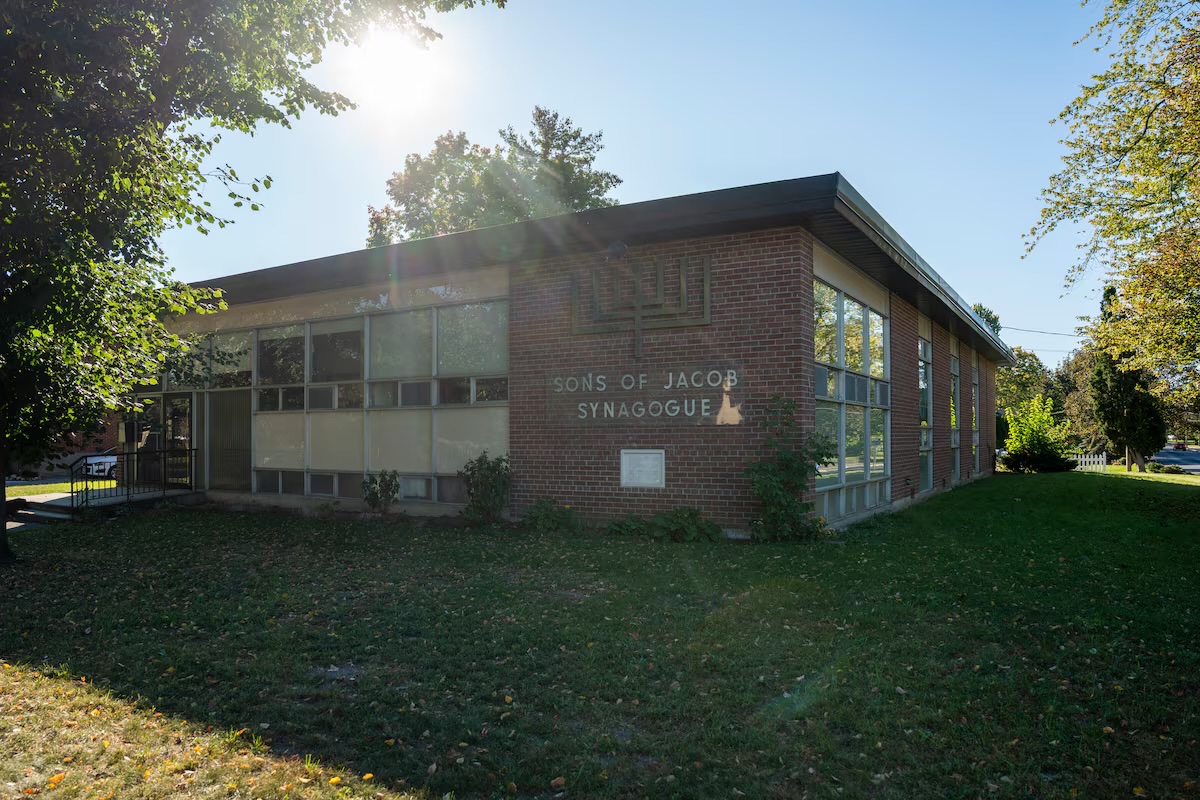
The list of sponsoring and advocating religious groups is a long one. From the Canadian Jewish Congress—which was confronted with a Canada that in the years 1937 to 1945 had one of the lowest admission of Jews of any refugee receiving country—to the World Sikh Organization, the National Spiritual Assembly of Bahá’ís, the Ismaili Council of Canada, and the Canadian Council of Churches, religious groups have done the heavy lifting. By the end of 1979, Canada announced that it would admit 50,000 Indochinese refugees, half of that number sponsored and supported by Canadian churches.
Along with refugee support, Anglican, Catholic, and United churches have carried out the resistance practice of sanctuary in 50 different incidents, affecting 288 migrants between 1983 and 2009.
“Churches offering sanctuary have effectively been courts of final appeal for those who are facing deportation,” writes Cameron. But the sanctuary cases have also influenced government in the creation of merit-based appeals for failed refugee claimants by a combination of resistance and bringing unfair punitive government actions to the Canadian public’s attention—and ultimately to the courts.
Canada’s unique group-of-five private sponsorship program gets and deserves a special mention. When the program was created, it was at once an internationally game-changing lifeline for refugees. Private citizen groups of five people, often with a religious connection, would raise sufficient funds to support a new government-approved refugee individual or family for the first year.
The money—about $35,000 for a family—would be put in a trust account as proof to the government. The group would also agree to support the newcomers in personal as well as financial needs, making their success rate in Canadian society remarkably high. If the program had a weak point, it was the government bureaucracy’s inability to do its share of the paperwork that would lead to a visa and a plane ticket to Canada in a timely way.
I have personally been a member of a group of five whose sponsored Eritrean family waited precariously for four years, living underground in war-torn Sudan. It struck me that if any Canadian would have to wait more than four years for the government to issue a driver’s licence or a health card there would be a rebellion. Yet a young family, facing a daily life-or-death situation, was forced to hide out while the paperwork dragged on for years.
Despite the success rate for group-of-five sponsored refugees, the government has paused—if not shelved—this exceptional program.
A Renewed Canadian Welcome offers real-experience stories about what may be Canada’s most flawed and controversial migration activity: the temporary foreign worker program.
Canada first temporary foreign worker program began in the 1800s. Rena Namago and Dr. Ethel Tungohan write, “about 15,000 Chinese men were brought to Canada as cheap and expendable labour for the construction of the Canadian Pacific Railway.”
These men had no access to permanent status and were expected to return to China, although few could afford to do so.
“The perceived need for cheap labour was in tension with the desire to limit non-white immigrants from permanently settling, leading to the creation of more temporary work programs in caregiver streams as well as in the agricultural sector.”
Marco Luciano, writing a chapter on “The Roots of Migration,” tells the story of Evangeline Cayanan who emigrated from the Philippines to help her poverty-stricken family. Coming to Canada on a closed work permit, which limited her to working for only one employer, she was promised a 40-hour-a-week job at a Toronto tourist restaurant. When she arrived, she discovered that the job was only for 20 hours a week, and that she had to pay her employer rent for her room. She complained, and was fired.
“Her next employer was a chain restaurant in Edmonton, where the manger sexually harassed her and got her pregnant,” writes Luciano. “Cayanan filed a grievance … but was unjustly dismissed.
Cayanan’s work permit was taken away and she became an undocumented worker and single mother supporting herself and her daughter by cleaning three downtown Edmonton buildings for a contract cleaning company that paid her less than the minimum wage.
“When Cayanan and her Canadian-born daughter fought their deportation in 2022, they received a last-minute reprieve and were given the chance to reapply under humanitarian and compassionate considerations.”
Stories like those of Cayanan are some of the lived experiences that Rodríguez’s book highlights. Migration—often seen as government and economic policy—is first about people. If Canada doesn’t get the migration people stories right, then it runs the risk of falling into a trap that will result in the perpetual scapegoating of newcomers and the demise of hope. Luckily, the country has numerous civil society and religious groups working largely behind the scenes to keep that hope alive. Their stories need to be added to the public debate.
Writer
KLHIISA is a registered Non-Profit Organization.