Loading...
Canada was never supposed to work. It is too vast, too varied, too pulled in too many directions by geography and history and self-interest. A French-speaking nation inside an English-speaking continent. A federation of regions with genuinely different economies, different cultures, different relationships to the land.

KLHIISA
Writer
By Debakanta Jena Contributor The Star, June 10, 2026
Canada was never supposed to work. It is too vast, too varied, too pulled in too many directions by geography and history and self-interest.
A French-speaking nation inside an English-speaking continent. A federation of regions with genuinely different economies, different cultures, different relationships to the land.
The wonder was never that Canada struggled. The wonder was that it held together at all, and that for most of its history, it did so not through coercion but through a quiet shared conviction that we were better together than apart.
That conviction is weakening. Not because Canada lacks enemies, but because Canada is forgetting how to act like a country.
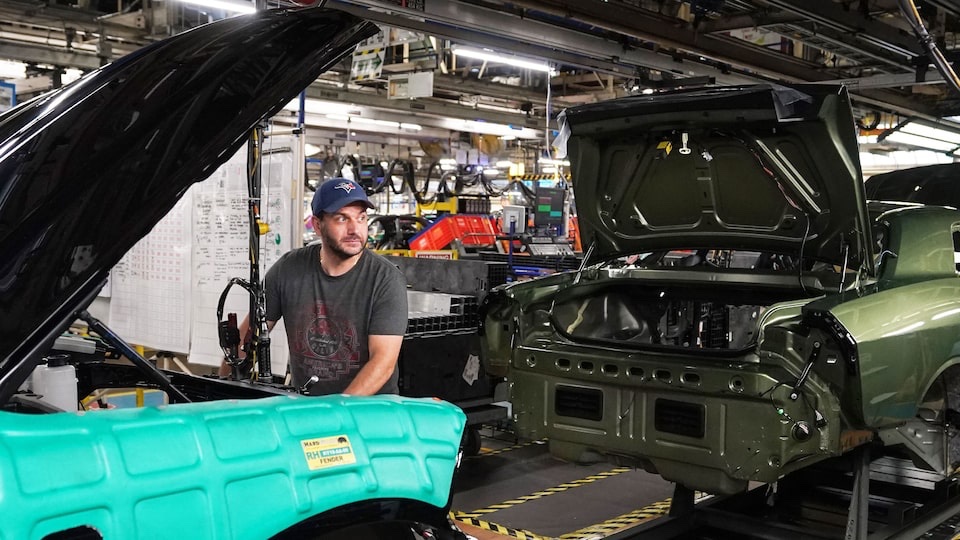
U.S. President Donald Trump’s tariffs have been punishing. Every region has felt the pressure differently. Ontario’s auto plants are contracting. Atlantic fisheries are watching their American market shrink. Prairie farmers are navigating export uncertainty. Alberta’s energy sector has been told its largest customer is no longer reliable.
A collection of regions
But external pressure is not the real diagnosis. Pressure from outside reveals what was already true inside. Canada does not currently behave like a country with a shared purpose. It behaves like a collection of regions, each nursing its own grievances, each calculating its own advantage, each waiting for the others to move first.
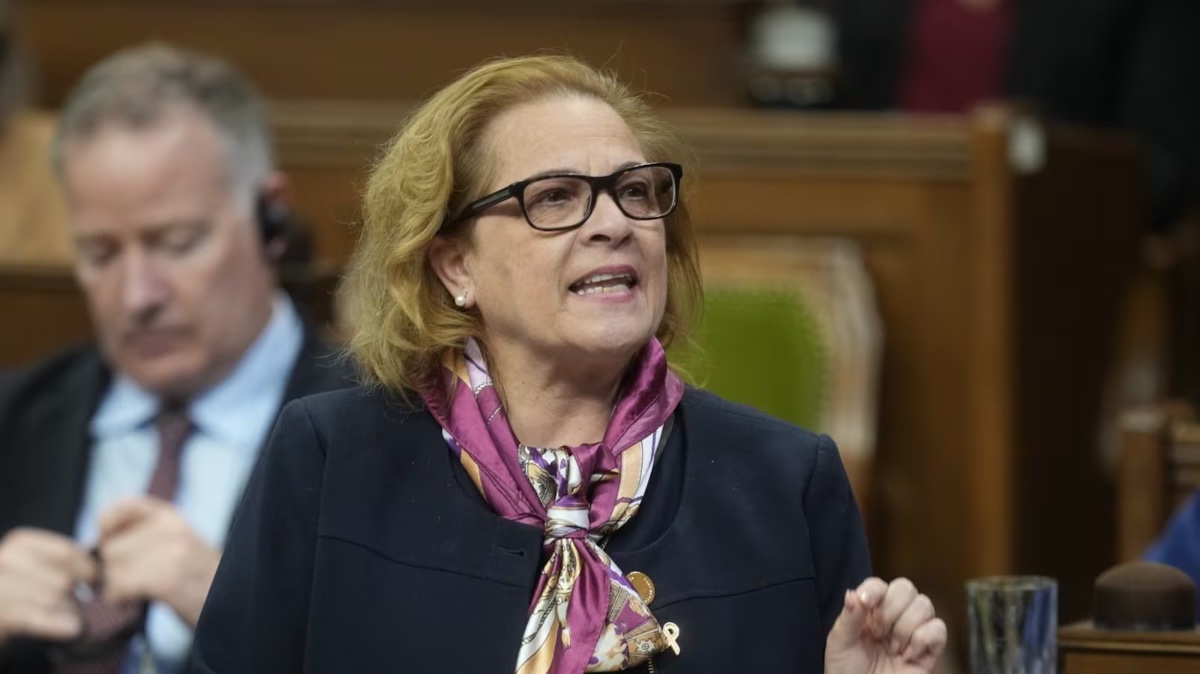
Alberta’s planned October referendum, with its separation question, did not emerge from nowhere. It emerged from decades of feeling that the wealth Alberta generates is taken as given while the industry producing it is treated as a political liability.
That feeling is not manufactured. It is not extremism. Calling it extremism, as too many commentators reflexively do, is precisely the kind of dismissal that transforms legitimate frustration into something harder to reach.
But this cannot only be Alberta’s story. That framing is itself part of the problem. Across the country, provincial leaders have found it easier to define the national interest as whatever suits them locally. It wins votes. It also leaves fractures that are genuinely difficult to repair.
A pipeline that would reduce Canada’s dangerous dependence on a single export market becomes a regional battleground. Supply management, internal trade, fiscal transfers, each becomes a trench rather than a conversation. And somewhere in all of that, the country gets a little smaller.
Nearly seven million Canadians lack a family physician. Home ownership has moved beyond reach for a generation of young families. Immigration, genuinely necessary in the long run, arrived at volumes that outpaced the housing, hospitals and infrastructure built to receive it.
These are not fringe anxieties. They are the daily reality for millions of people whose concerns were too often met with lectures rather than solutions. When people feel managed rather than heard, they stop trusting the institutions doing the managing.
Underneath all of it is a problem of distance. Canadians have grown unfamiliar with each other. An Ontarian’s sense of Alberta is a caricature. An Albertan’s sense of Toronto is a caricature. The east-west connective tissue, in transport, trade and simple human movement across this country, has atrophied. That unfamiliarity makes fractures easier to deepen and harder to repair.
Someone who came to this country from elsewhere, who grew up in India, trained for years in England, and spent two decades caring for patients in a small prairie city, knows something about what Canada offers that is easy to take for granted from inside it.
Not a policy. Not a proclamation. Something quieter. The assumption that you belong. The expectation that you will contribute. The absence of any requirement to explain yourself. That is the whole thing.
Which is why the question worth sitting with is this. If that Canada is still alive in its daily texture, why does the political culture feel so estranged from it?
Strong leaders, strong country
This moment requires leaders willing to close that distance. Leaders willing to stand before their own voters and say that a strong Canada is not the enemy of a strong province.
Alberta’s energy reaching global markets, Ontario’s manufacturing surviving, Atlantic fisheries finding new customers, none of this happens inside a fragmenting federation. We get strong together or we get weak together. There is no third option the geography and economics of this country actually permit.
Our founders built something improbable and trusted that successive generations would have the wit to maintain it. We have coasted on that inheritance long enough.
The idea of Canada is not lost. But it will not save itself.
Writer
KLHIISA is a registered Non-Profit Organization.