Loading...
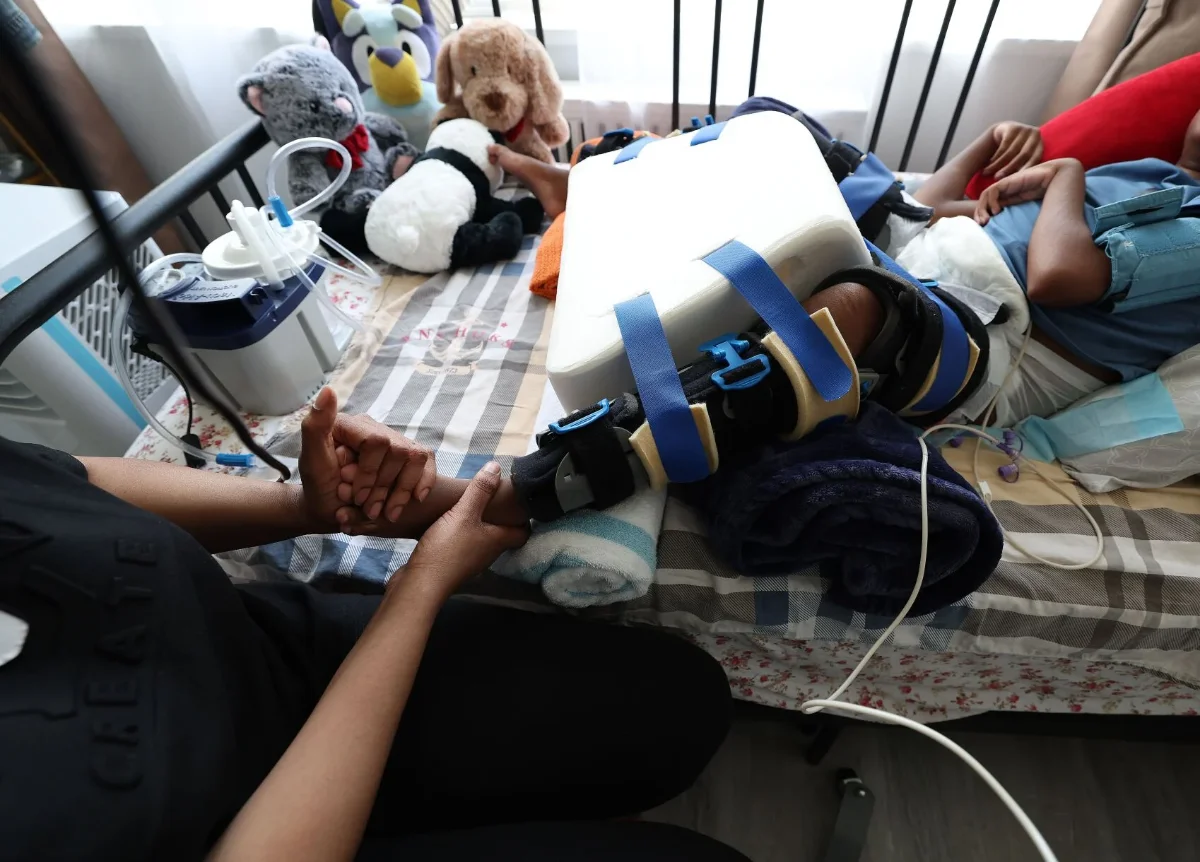
A non-verbal 11-year-old girl who has cerebral palsy, epilepsy and severe scoliosis that is repositioning her organs could be the face of the Carney government’s recent cuts to refugee and asylum-seekers’ care.

KLHIISA
Writer
June 8, 2026 Toronto Star By Althia Raj National Columnist
Althia Raj is a national politics columnist for the Star. Follow her on Twitter: @althiaraj
A non-verbal 11-year-old girl who has cerebral palsy, epilepsy and severe scoliosis that is repositioning her organs could be the face of the Carney government’s recent cuts to refugee and asylum-seekers’ care.
The girl and her mother — who will be identified here as “Emma” and “Olivia,” because Olivia fears using their real names will put them in danger — fled to Canada more than three and a half years ago from Uganda, after Olivia says family members tried to perform witchcraft on Emma to cure her “spiritual” illness, and ostracized them because they believed Emma’s condition was contagious. The two have been living in Toronto since Olivia arrived with a severely malnourished Emma in 2023. They are still waiting for their asylum claim to be heard.
Up until last month, Emma’s medical needs had been fully covered under the Interim Federal Health Program (IFHP), which provides temporary health-care coverage to refugees for a year and to asylum-seekers while they wait to be approved or deported.
But now Olivia, who lives on social assistance because her daughter requires 24-hour-a-day care, must come up with more than $500 a month for new co-pay charges. Their medical costs would be fully covered if they were residents.
“It does cause me a lot of stress,” she said Friday. “If I am not getting it from IFHP, then that means we will not get most of these services. I just have to focus on those that are life-threatening — that if she doesn’t get them, she will not survive, like the feeding supplies and the medication. And also with those, if I pay for them, that means I will have to cut off on other basic home needs, like meals that we need, the toiletries.”
If the program sounds familiar, it’s because back in 2012 the Conservative government severely slashed IFHP, leading to a public outcry.
At the time, then-immigration minister Jason Kenney said deep cuts were necessary to ensure fairness for taxpayers. “We do not want to ask Canadians to pay for benefits for protected persons and refugee claimants that are more generous than what they are entitled to themselves,” he said.
Doctors protested. They led a sit-in in a Toronto cabinet minister’s office, stormed news conferences, took to Parliament Hill in their white coats, and eventually won in court, when a federal judge ruled Harper’s cuts were unconstitutional and amounted to cruel and unusual treatment that put the lives of refugees and asylum-seekers at risk.
The Conservatives pledged to appeal the decision, but the Liberals called for compassion.
“The tendency of this (Conservative) government to pit us against them, Canadians versus refugees, must stop,” said then-senator Jane Cordy. “Most refugees have arrived in Canada with nothing. Why would we want to re-victimize them?”
The Grits vowed to “fully reinstate” the program when they came to power in 2015.
“We think it’s unconscionable that the government would impact the most vulnerable refugee applicants in this way,” incoming immigration minister John McCallum told Maclean’s magazine. “Indeed, they’re shooting themselves in the foot, because it probably ends up costing taxpayers more, because the federal government may save some money, but then, people, if they’re really sick, they’ll go to emergency, then that ends up costing more.
“So it’s both morally wrong and, as the court says, cruel and unusual, and financially stupid.”
(He wasn’t wrong; a peer-reviewed study of the cuts showed hospitalization at SickKids increased after IFHP cuts and costs were downloaded to the hospital.)
But that was in 2015. Cordy has since left the Senate. McCallum has died. The Liberals have a new leader. And though the program was fully restored in 2016, Prime Minister Mark Carney slashed it again last month, introducing $4 co-pays per prescription and 30 per cent co-pays for services such as “assisted devices,” emergency dental care, vision care, mental health care and other outside-hospital personalized care.
“We’re being responsible. We’re still offering excellent health care to asylum-seekers, to refugees. We are asking for a supplemental co-payment that we think is very modest and very fair,” Davenport MP Julie Dzerowicz told the Star. “That is consistent with what a lot of Canadians are asked to do.”
Since May 1, Olivia has had to cover 30 per cent of the costs for assisted devices that the federal government considers to be “supplemental”: the four $12 bags Emma uses each day for her feeding formula, the extra $30 a week for tubing, the saline to flush the line so the food doesn’t get stuck in the tube, the syringes, the cleaning gauze, the diapers, the co-pays for all her medication, including her formula, plus additional fees for the personal support worker Emma requires, as Olivia can no longer lift her daughter, and needs help providing basic hygiene. “When I have to do the diaper changes by myself, I just have to do what I can.”
Emma is awaiting spinal surgery but first requires surgery on her arms to loosen them, as they are stuck in front of her. “They can’t be pushed to the side of her body,” Olivia explained. Following her surgeries, Olivia will have to pay 30 per cent of the physiotherapy charges. And when her daughter is well enough to attend a specialized school, her mother will have to find a way to pay for the full-time support worker Emma requires.
That is unless Emma and Olivia have their asylum claim decided first.
The Conservatives — and now the Liberals — often suggest asylum claimants and refugees get better care than other Canadians but doctors stress that this is not true. “They are not. They’re receiving care that is equivalent to what individuals at the same income level are receiving,” said Toronto family physician Vanessa Reddit, referring to others on low-income supports.
Reddit describes the Carney co-pays as so “completely unaffordable” for most refugees and asylum-seekers that they amount to a “denial of care.”
“The co-pay for one counselling session is $60. People do not have that money. Not a day goes by in my clinic where I’m not seeing somebody who struggled or could not afford their TTC fare to the clinic or who they tell me they’re eating one meal a day because that’s all the food they can afford,” she said. “That’s the reality of people’s lives, so it’s just preposterous to say, ‘Well, you know, pay the $60 for the trauma counselling for the 10 years of rape that you suffered.’ It’s just so disconnected from reality.”
“People are going to die because of this, and the government doesn’t care,” added Maheen Hyder, a mental health and trauma therapist working with refugee claimants.
The IFHP cuts are expected to save the government $231.9 million annually. Program costs have ballooned due to a larger number of claimants and lengthy delays at the Immigration Refugee Board. But instead of prioritizing spending toward clearing that backlog, the government changed the law to make it more difficult to claim asylum and is now cutting health care benefits.
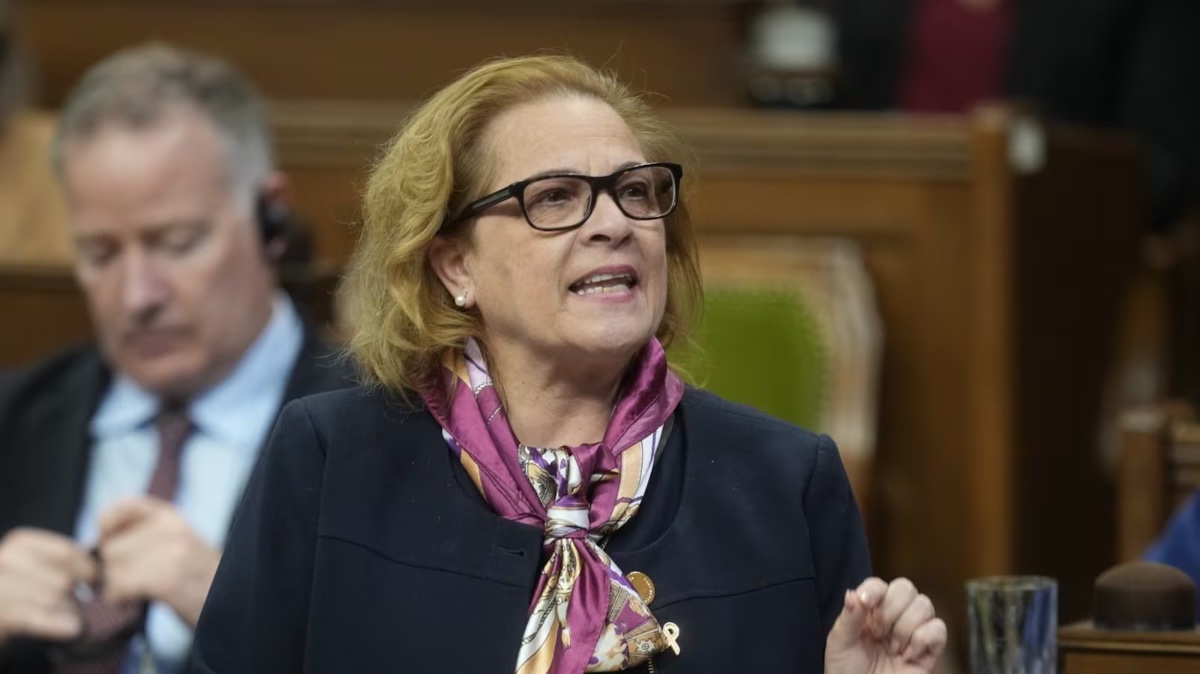
In a statement, Immigration Minister Lena Metlege Diab’s office trumpeted the value of IFHP for helping “to prevent serious health issues and emergency interventions caused by delays in seeking medical services,” but said the changes were introduced to provide “meaningful savings.” Last year’s expenditures topped $896 million — though the annual average costs per IFHP recipient was less than a third of the average provincial resident, $1,645 versus $5,868.
Diab’s spokeswoman said the “impact of these changes would be closely monitored to safeguard public health.”
Some Liberal MPs say they hope the government will consider changes.
“One of the most powerful levers there is, is speeding up the processing of refugee claims … That’s an area where I’d be glad to be helpful,” wrote Danielle Martin, a family physician.
Thunder Bay—Rainy River MP Marcus Powlowski, a former emergency room doctor, suggested small tweaks could make a big difference: crucial medication could be exempted from co-pays, or there could be cap on prescription co-pays, or the program could be means-tested.
“The other thing I think is probably short-sighted is psychological services from conflict areas. I think that probably is not a wise choice to cut back on,” he said. “When you get people, for example, growing up in a conflict zone and seeing terrible things, it’s better they get psychological counselling and hopefully deal with their issues before that trauma manifests itself in other negative ways, like turning to violence.”
Michael Coteau, Olivia and Emma’s MP in Scarborough—Woburn, told the Star the refugee system needs to move as “quickly as possible, to ensure that people who are approved, can start to access programs like OHIP and receive the same standard of care as any other Canadian.
“And when it comes to children, I firmly believe that every child in Canada should have access to a barrier free health care system,” he wrote in an email.
Olivia agrees.
“I just want (Emma) to enjoy the things that other children enjoy, like going to school … being around other children,” she said. “We were isolated for a long time and now that we are here, and she has the freedom to go to school. I want her to experience that.”
Writer
KLHIISA is a registered Non-Profit Organization.