Loading...
If a similar proportion of women in the city of Ottawa were missing or murdered over the past 20 years—let’s say 700—it would be a crisis. That’s close to the proportion compared to the overall Indigenous population. But Indigenous women?

KLHIISA
Writer
If a similar proportion of women in the city of Ottawa were missing or murdered over the past 20 years—let’s say 700—it would be a crisis. That’s close to the proportion compared to the overall Indigenous population. But Indigenous women?
BY ROSE LEMAY May 4, 2026 Hill Times
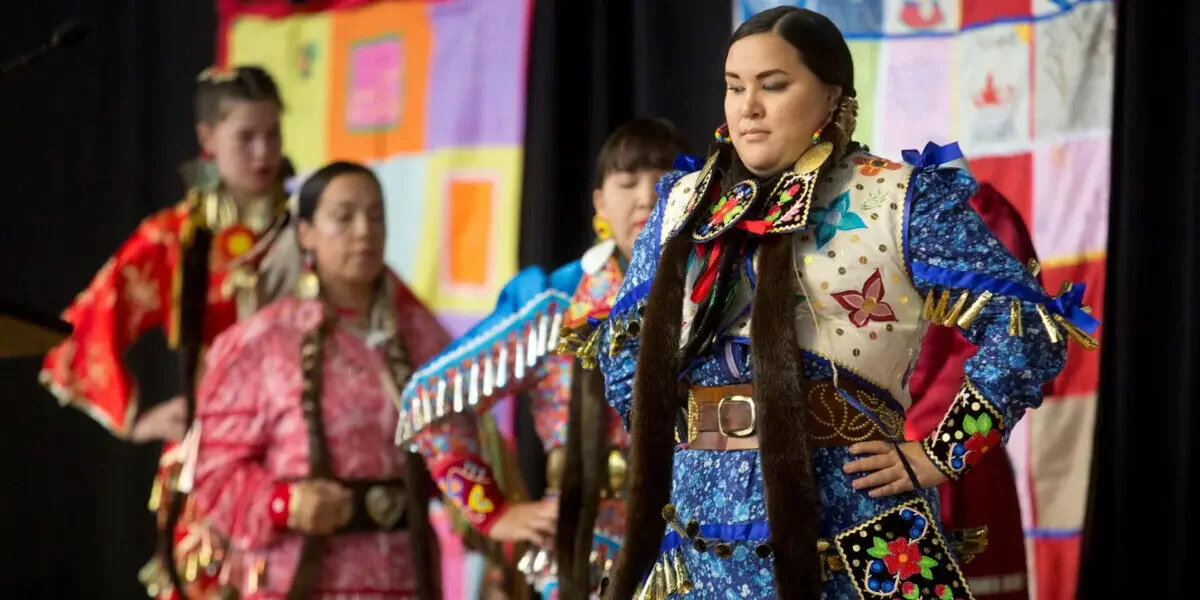
OTTAWA—Red Dress Day is May 5, a day to remember those lost: Canada’s Missing and Murdered Indigenous women and girls. The red dress signifies this loss of Indigenous women. There will be events in many cities, including in Ottawa.
In June 2019, the National Inquiry into Missing and Murdered Indigenous Women and Girls released its final report. After Indigenous-community hearings and statement gathering, expert hearings and forensic document reviews, the final report covered a wide swath of risk factors and barriers to Indigenous safety.
There is no one factor or one problem to fix, to stop this loss of life. If there was only one thing, one would hope somebody would have already fixed it. From lack of equitable health care to loss of culture through forced schooling, to ongoing racism and the lack of justice across policing and justice systems, it seems to be stacked against Indigenous Peoples. In short, being Indigenous and female in this country increases risk. Statistics Canada noted in 2023 that Indigenous women and girls are six times more likely to die by homicide than non-Indigenous women.
Indigenous women bear the price. How many have been lost? There’s a number here in Canada, and it’s staggering. But that number has not led to systemic change.
If a similar proportion of women in the city of Ottawa were missing or murdered over the past 20 years—let’s say 700—it would be a crisis. For reals, that’s close to the proportion compared to the overall Indigenous population. If a similar proportion of women in Calgary, or Toronto, or anywhere else, it would be a crisis. But Indigenous women?
The Investigative Journalism Bureau within the University of Toronto found that between 2019-2025, 340 Indigenous women and girls were murdered or died under suspicious circumstances. So it continues.
Ottawa lost Jolene Arreak. Savanna Pikuyak. Susan Kuplu. Mary Papatsie. These are the women we know of. They were mothers, sisters, cousins. They were fellow students, co-workers, neighbours.
As a kid I travelled through Prince George, B.C., one end of the Highway of Tears to Prince Rupert on which numerous Indigenous women have gone missing. I lived in Vancouver during the time of the Downtown Eastside murders where at least 49 women killed and many were Indigenous.
This is the paragraph in the column that demands governments act. But this writer doubts that governments care, as this is a longstanding crisis over decades and counting. The number lost across the country has not pushed the federal government to act decisively, rather it has done little to lead change across systems. The number lost has not forced provincial governments to act, nor the RCMP. The feds have thrown some money at the problem, but have not pushed serious change in policing for Indigenous safety, nor in equitable health-care funding for Indigenous Peoples, no pressure on telecoms to ensure cell coverage on highways.
Imagine the urgency, funding, changes and airtime on the crisis if the city of Ottawa lost that number of women in the past 20 years? Federal, provincial and municipal politicians who didn’t act on the crisis would lose their seats, and elections would focus on the resolving the crisis. The truth is that we would not have waited for 20 years. Now compare it to the brutal silence from governments and politicians in the face of the loss of Indigenous women.
Who does actually care? Neighbours. Co-workers. Fellow students. Sisters. Brothers. On May 5, let’s stand with Indigenous women to remember the lost. And let’s stand with Indigenous women to say “not in my city.” And then continue to do the work after May 5.
Rose LeMay is Tlingit from the West Coast and the CEO of the Indigenous Reconciliation Group. She writes twice a month about Indigenous inclusion and reconciliation. In Tlingit worldview, the stories are the knowledge system, sometimes told through myth and sometimes contradicting the myths told by others. But always with at least some truth.
https://www.hilltimes.com/2026/05/04/stand-with-indigenous-women-on-may-5/502059/
Writer
KLHIISA is a registered Non-Profit Organization.